More than 7,900 people showed up for KubeCon events in Salt Lake City, and around 40% were first-timers. The main theme around the event as well as the keynote was almost all AI and inference. Somewhere in the middle of it, one question kept coming back: is the pod still the right unit of AI work?
Solo.io spent the week answering that. Solo speakers headlined two keynotes (three, including Thursday), led sessions in practically every track, and, with Google, hosted Agent Substrate Day the day before the conference kicked up.
Monday, Nov 9: Agent Substrate Day and the lightning talks
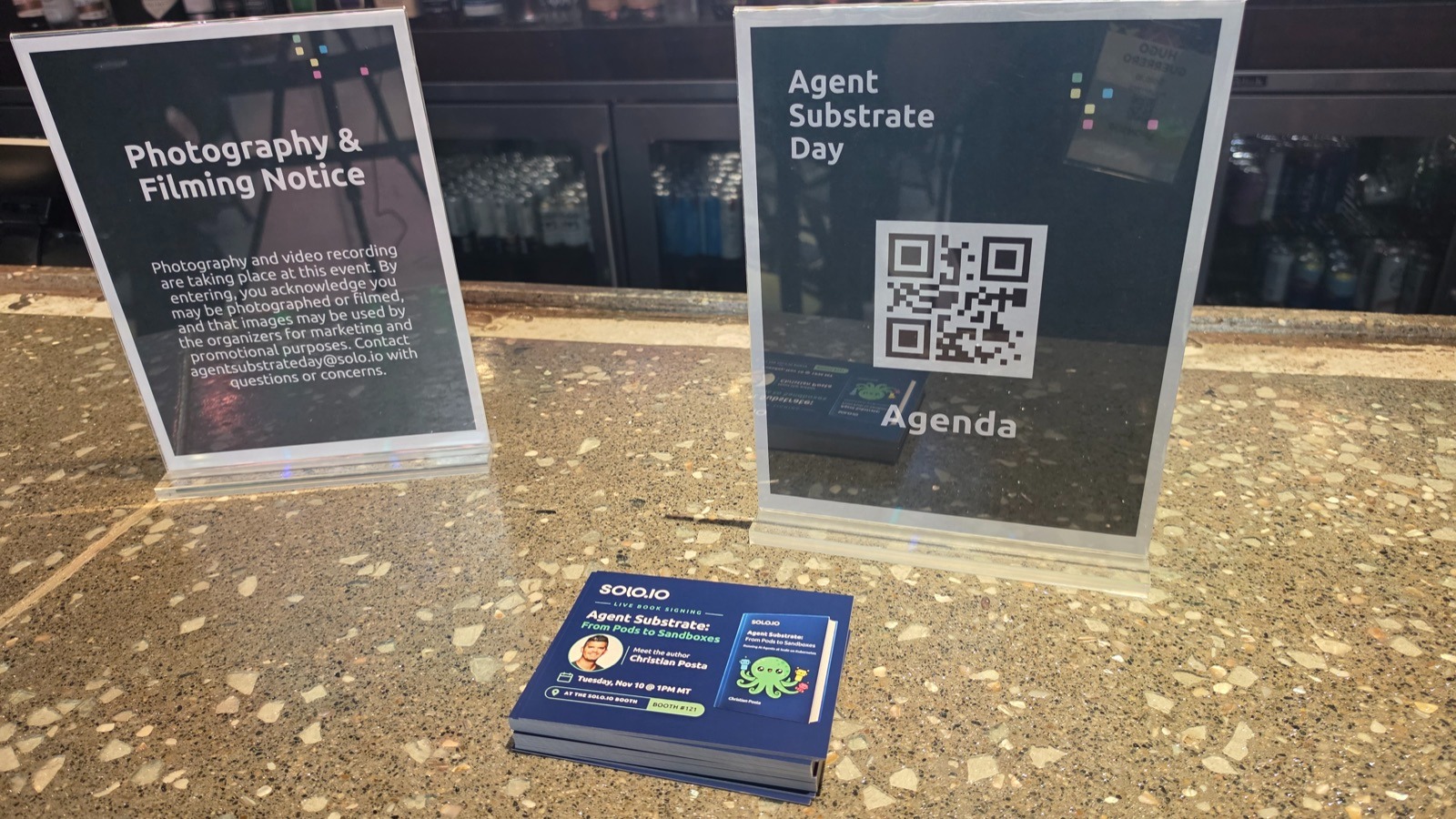
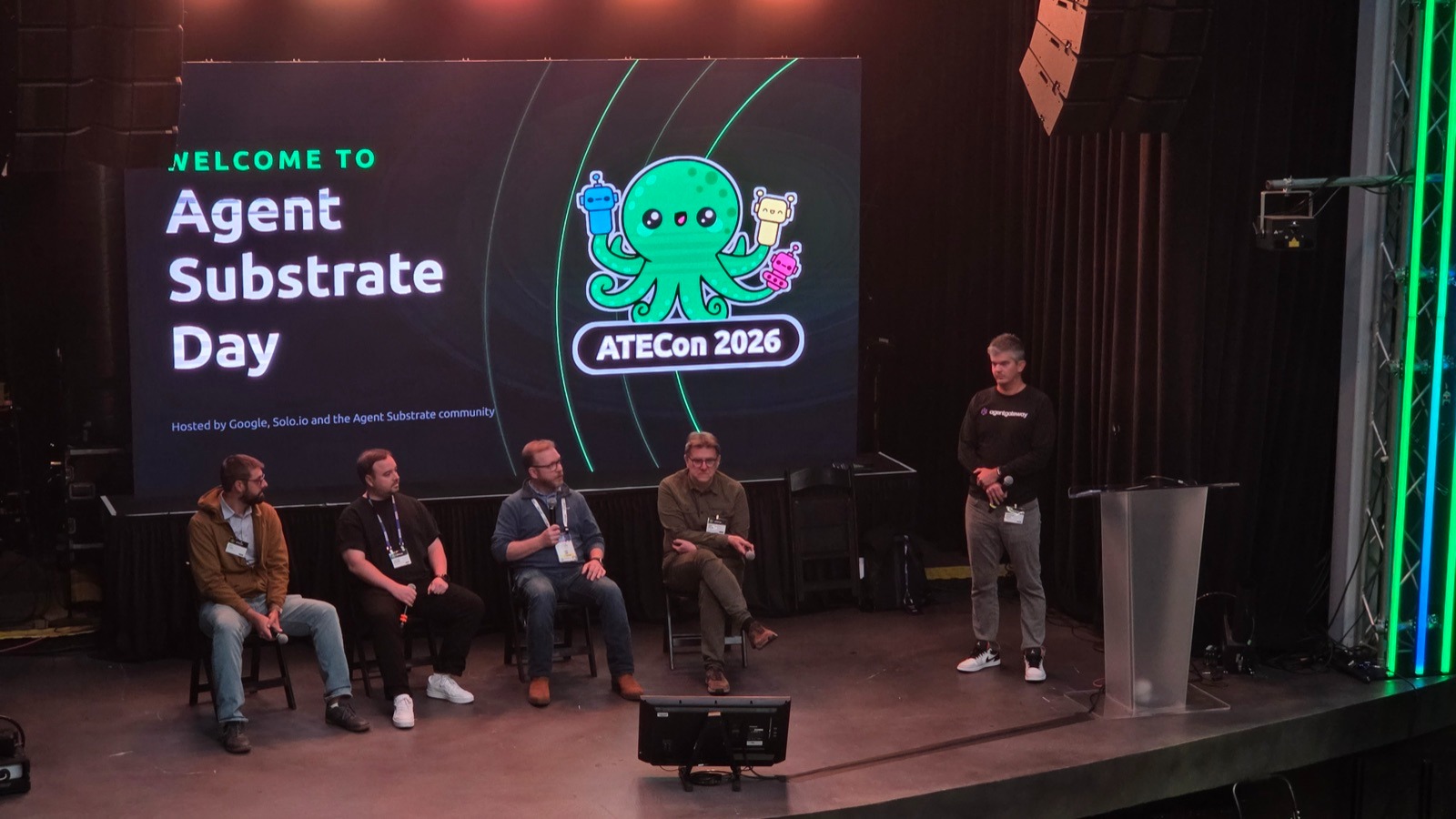
Agent Substrate Day ran Monday, co-hosted by Solo, Google and the Agent Substrate community. Most of the speakers were engineers who build the thing, and it showed. Slides were heavy and live demos performed on the main screen.
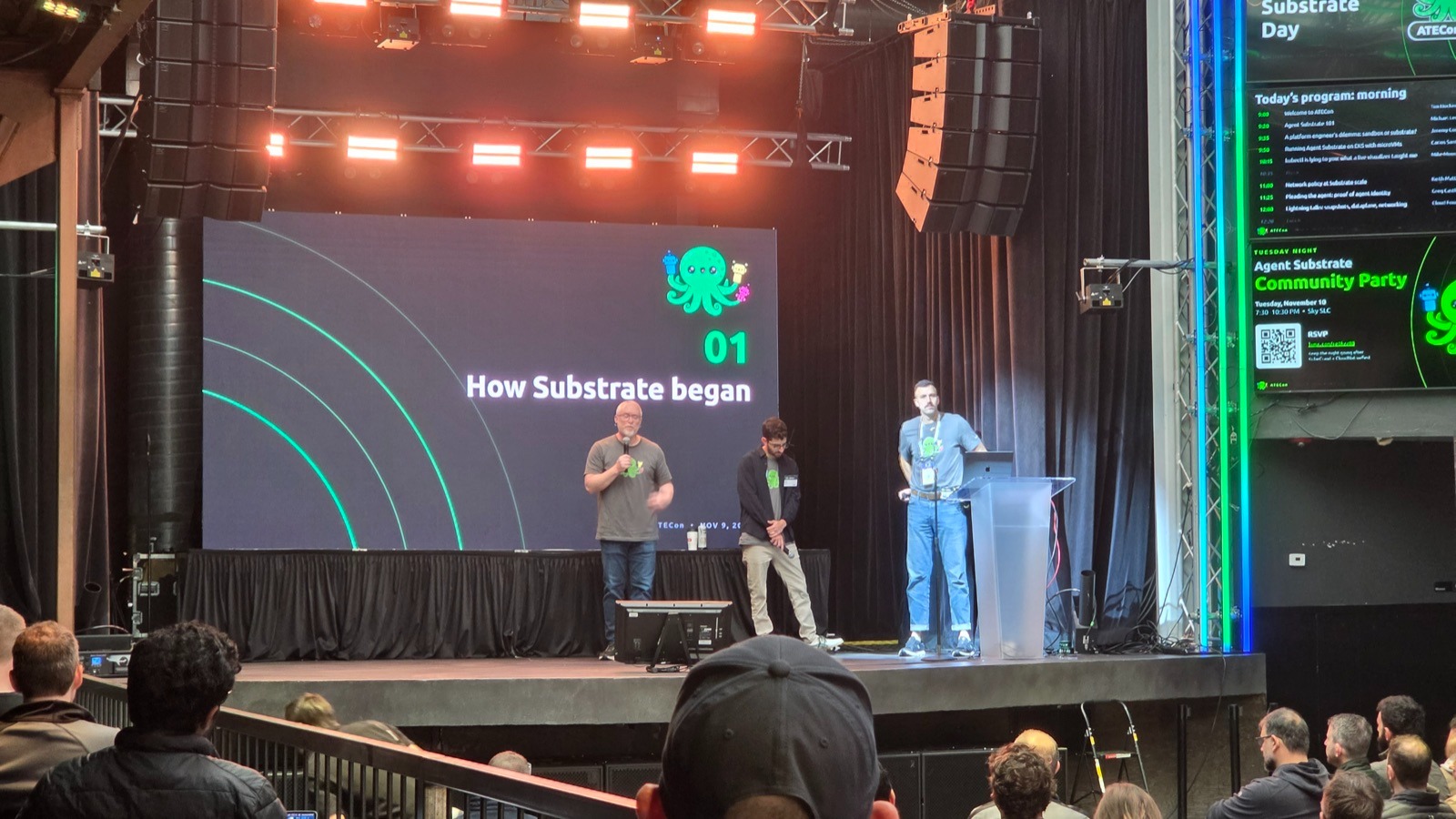
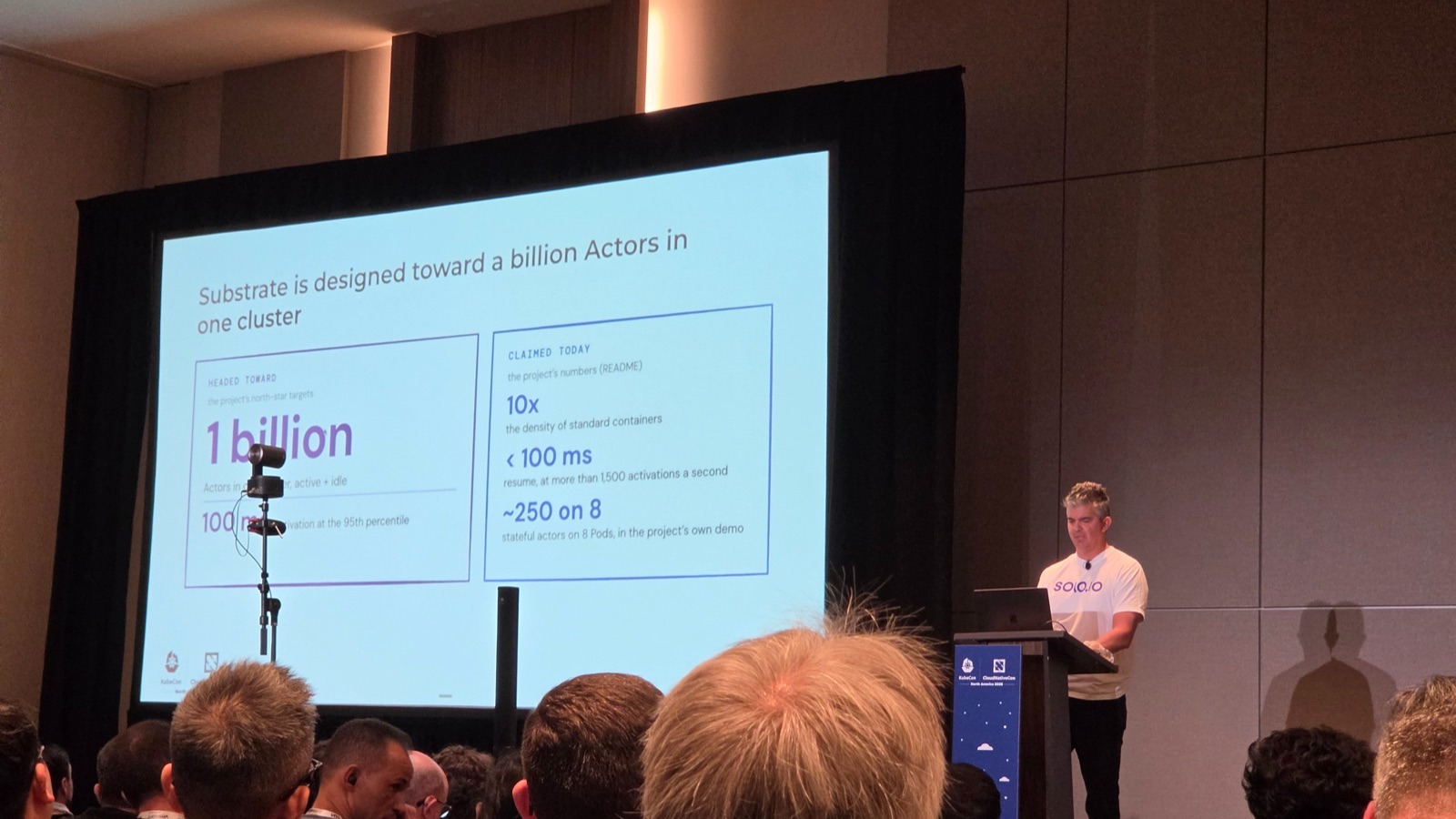
The morning started with how Substrate was conceived, and why agents don't fit one pod per workload. Kubernetes expects stateless services that scale out and appear the same. Agents generate code at runtime, pick up state that's specific to a task, and spend much of their time waiting. Give each one a pod and the API server pays for it. One slide put it as clearly as possible: one CRD per actor breaks the control plane. Thus Substrate decouples the actor (session, state, identity, policy) from the compute it happens to run on, and targets at a billion registered actors in a single cluster.
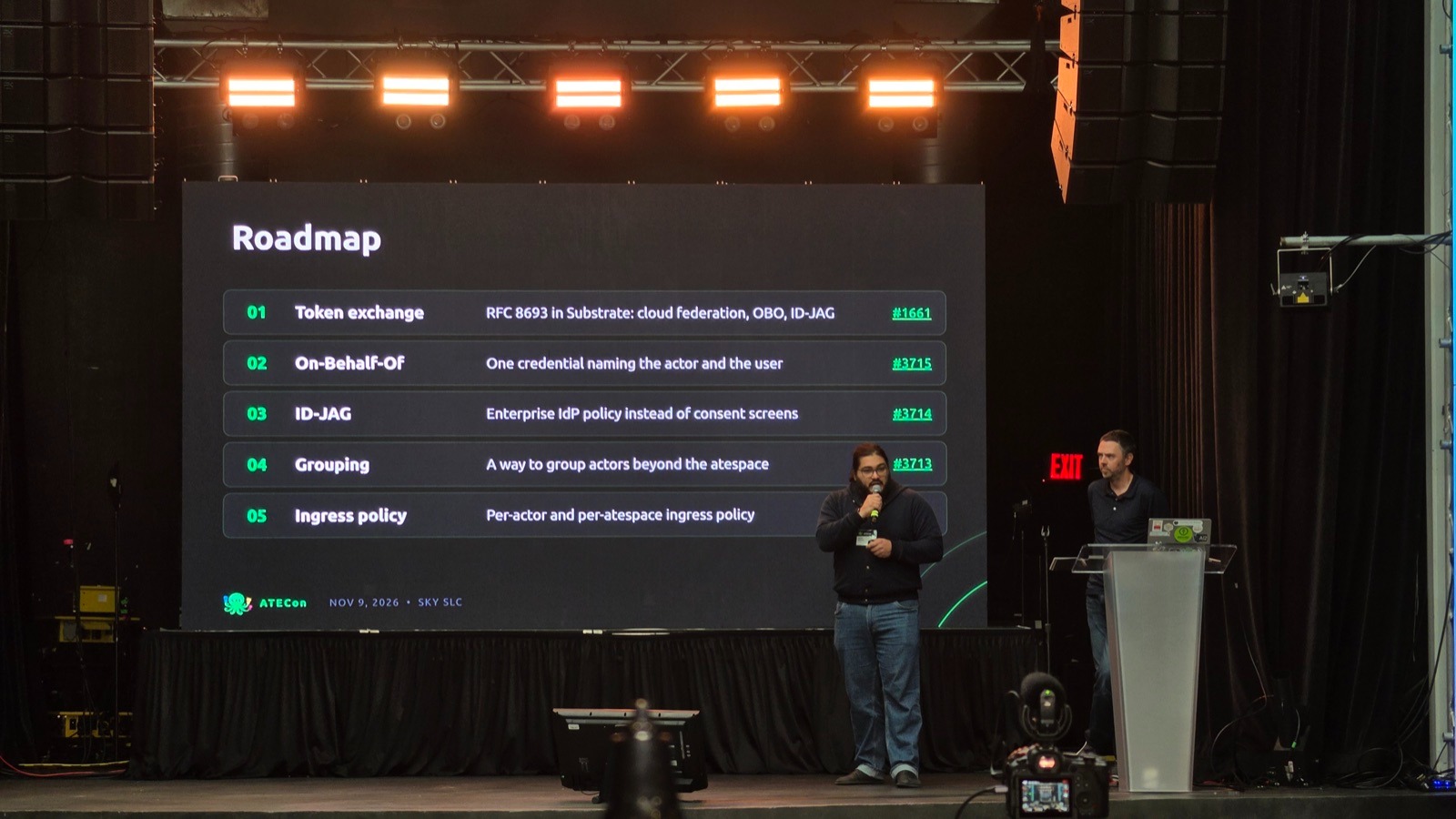
A Solo talk later looked forward from the other way, as a postcard from 2028. Its timeline runs from MCP in 2025 to shadow AI, remote agents and, ultimately, trust. The roadmap slide was more pragmatic: token exchange, on-behalf-of flows, grouping actors, and per-actor ingress policy.
AWS talked about running Substrate on EKS, Microsoft demonstrated the snapshot plugin API, and Google Cloud made the case for running things that aren't agents on it at all. One of the demos was a mail agent that never holds a credential. That one hit the audience.
At the Hyatt Regency, the CNCF project lightning talks had two Solo slots:
- Kagent 1.0 with Agent Substrate, Peter Jausovec
- Your Routes, My Rules: Making Gateway API Work at Enterprise Scale, David Jumani (kgateway)
Tuesday, Nov 10: keynotes, the booth and a very full schedule
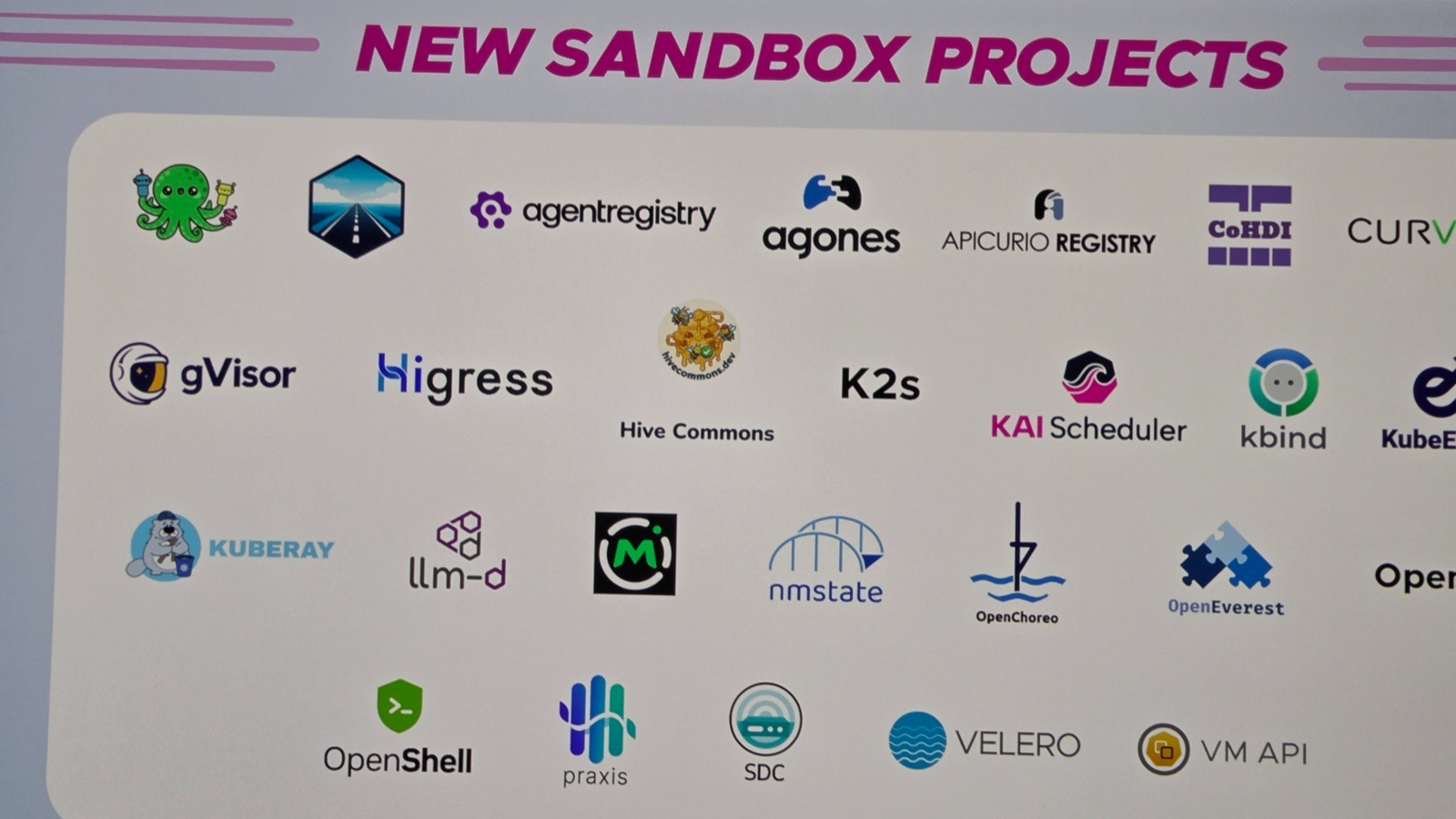
Tuesday opened with the main keynote, and the facts set the tone: inference traffic up 4x, 40% of attendance are new, two new Kubernetes AI certifications coming early next year (Certified Kubernetes Inference Engineer and Kubernetes AI Associate), and Kyverno and NATS graduating. KubeRay, OpenRL, Model Plane, VM API, OpenShell and Agent Substrate all joined as CNCF sandbox projects.
Agent Substrate: Open Layers for Agentic Systems. This was the Substrate launch, with five people on the stage: Google’s Tim Hockin, Jaana Dogan, and Dmitry Berkovich; Solo’s Eitan Yarmush; and Anthropic’s Luiz Scheidegger. Tim starts out by stating the obvious. Agent workloads are showing up in every Kubernetes cluster, and Kubernetes, as powerful as it is, was never built to handle them. So earlier this year the crew set out to design something that takes the best of Kubernetes and adds new primitives. It had to be open; it had to be community-driven.
Jaana explained why Google cared. Token serving capacity should increase every six months, and beyond inference, agents need sandboxes for isolation, which makes them a CPU concern too. Borg and Kubernetes never had the right execution model for something that is stateful, bursty, resumable, and in need of new security guardrails. Her guess was that these systems could end up taking over CPU demand in the next few years.
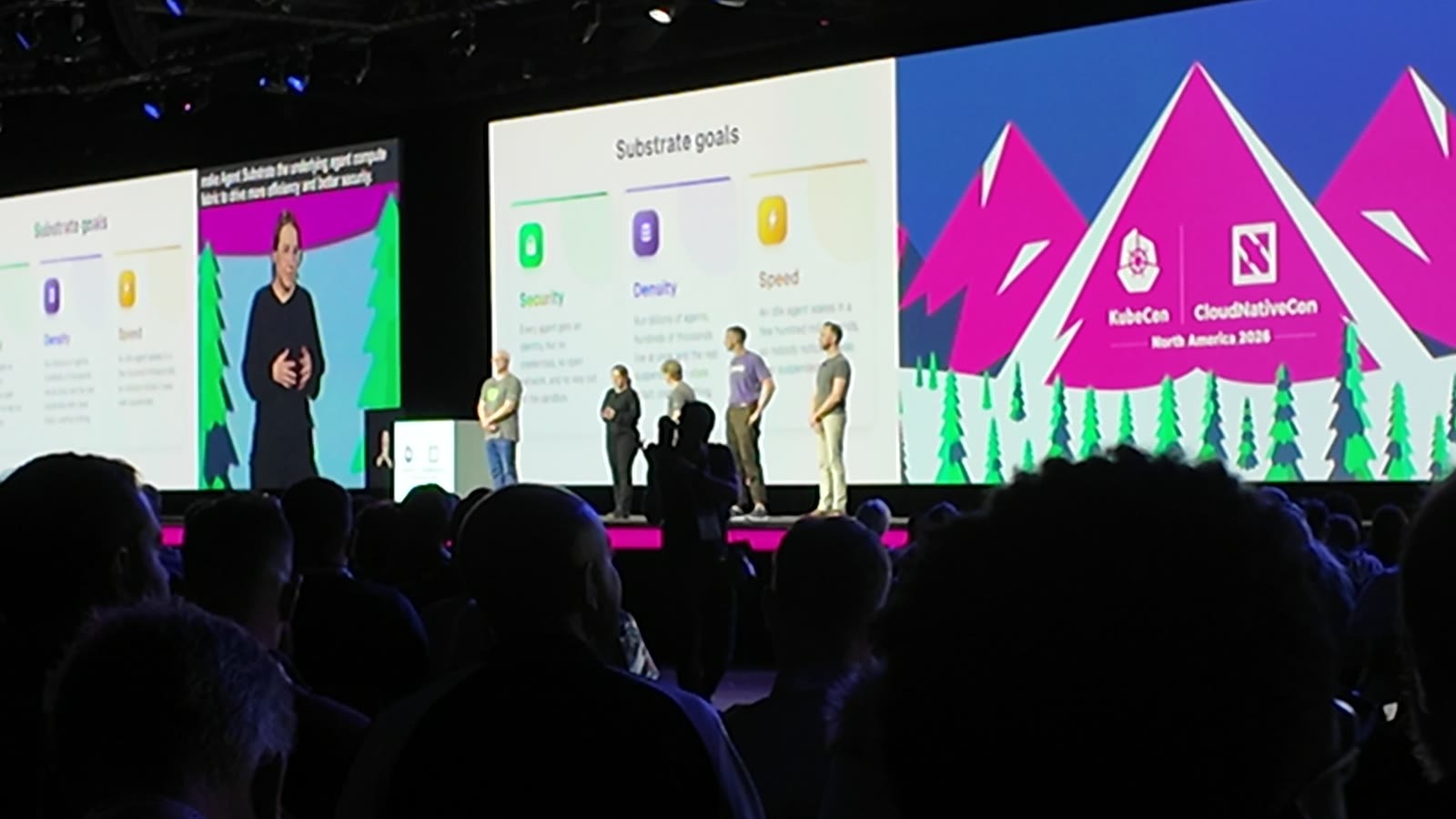
Dmitry told us about those three goals. Security: every agent gets an identity, but no credentials and no open network. Density: billions of registered agents, with just a fraction active at any moment. Speed: an idle agent wakes up in a split second, so nobody notices it was ever suspended. Google, Solo, Amazon and the rest had been building it together for months. The how, as presented: lightweight, densely packed sandboxes on top of standard Kubernetes, with memory and disk snapshots, idle actors suspended, and resumed on demand. That lets a huge registry of actors multiplexing over minimal infrastructure.
Since the launch of Claude Managed Agents in April, customers have been asking for the same thing, Luiz Scheidegger of Anthropic said: to run a fleet of agent sandboxes at scale and to do it securely. Managed agents are stateful and powerful, and they run in untrusted environments, where you want to restrict what an agent can see and what it can do. Nobody wants to build that security infrastructure themselves. So Anthropic launched the Agent Substrate bridge for Claude Managed Agents, which runs those workflows on top of Substrate.
Then it was time for the whole room to join in. On the screen was a QR code from which each attendee got their own Claude controlled agent, running in a sandbox on a Substrate cluster, as a virtual version of themselves roaming around a pixel-art map that matched the layout of the conference center. The agents could be sent on missions, like finding people, networking and trading virtual business cards, each one running in its own sandbox and suspending when done. A live dashboard displayed activations per second and sandboxes coming up. More than 2,000 people signed up while the team was still on stage, and the pitch was to push it past 3,000 and try to break it. The whole operation ran on a single GKE cluster of about 24 nodes, at roughly 65 agents per node, and was set to keep running all week.
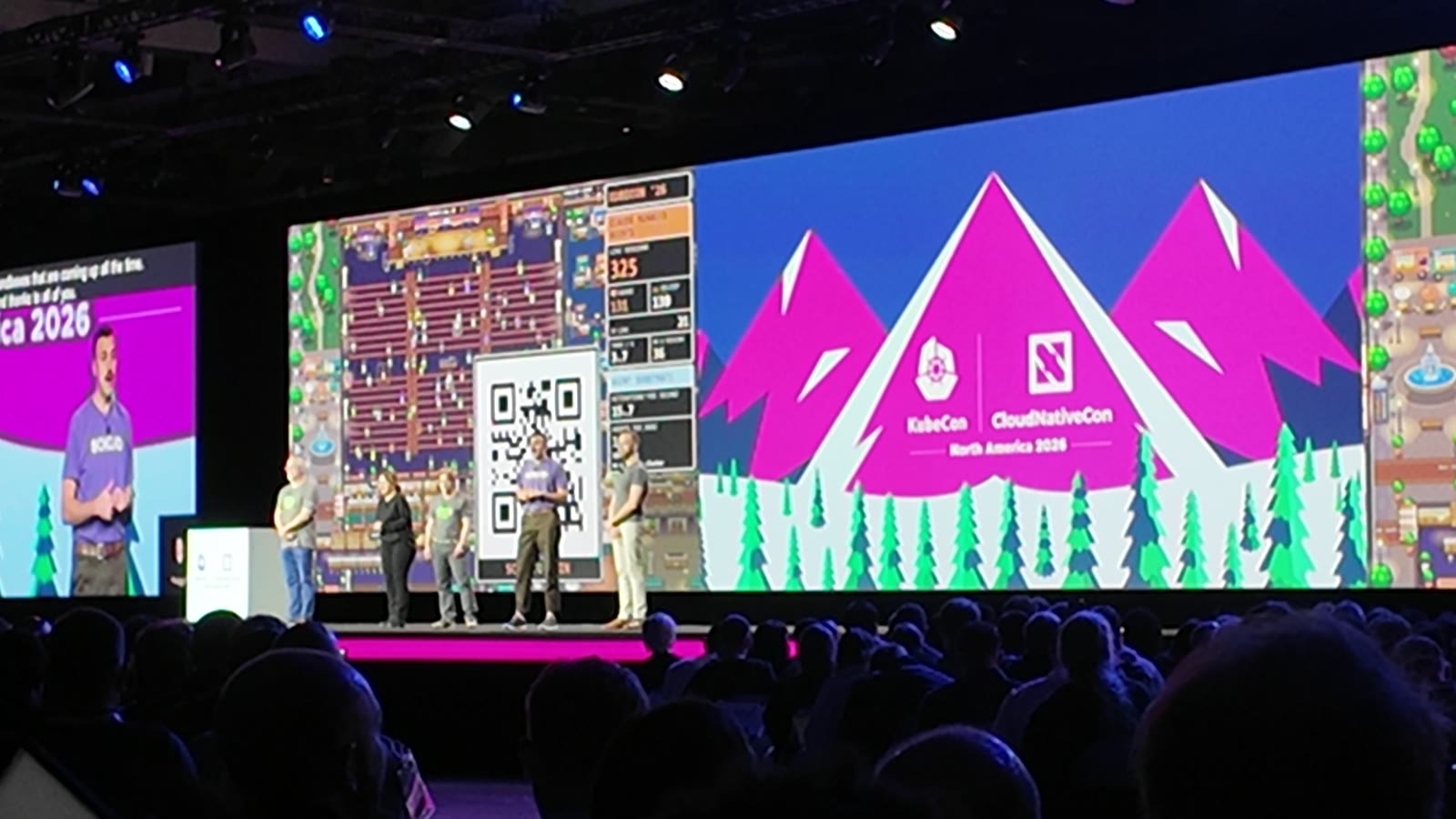
The wrap-up was quick. Agent Substrate is in the CNCF sandbox as it went 1.0 a few days ago ("fully supported"), while the community is open for contributions. The community also held a fantastic party that night. Check it out at ate.dev.
The Harness Is the New Runtime. Idit Levine and Keith Babo took the keynote stage. They began with a pattern most of the room had already experienced. Monoliths got virtual machines. Microservices have containers and pods. So what does the new kind of application, the agent, get?
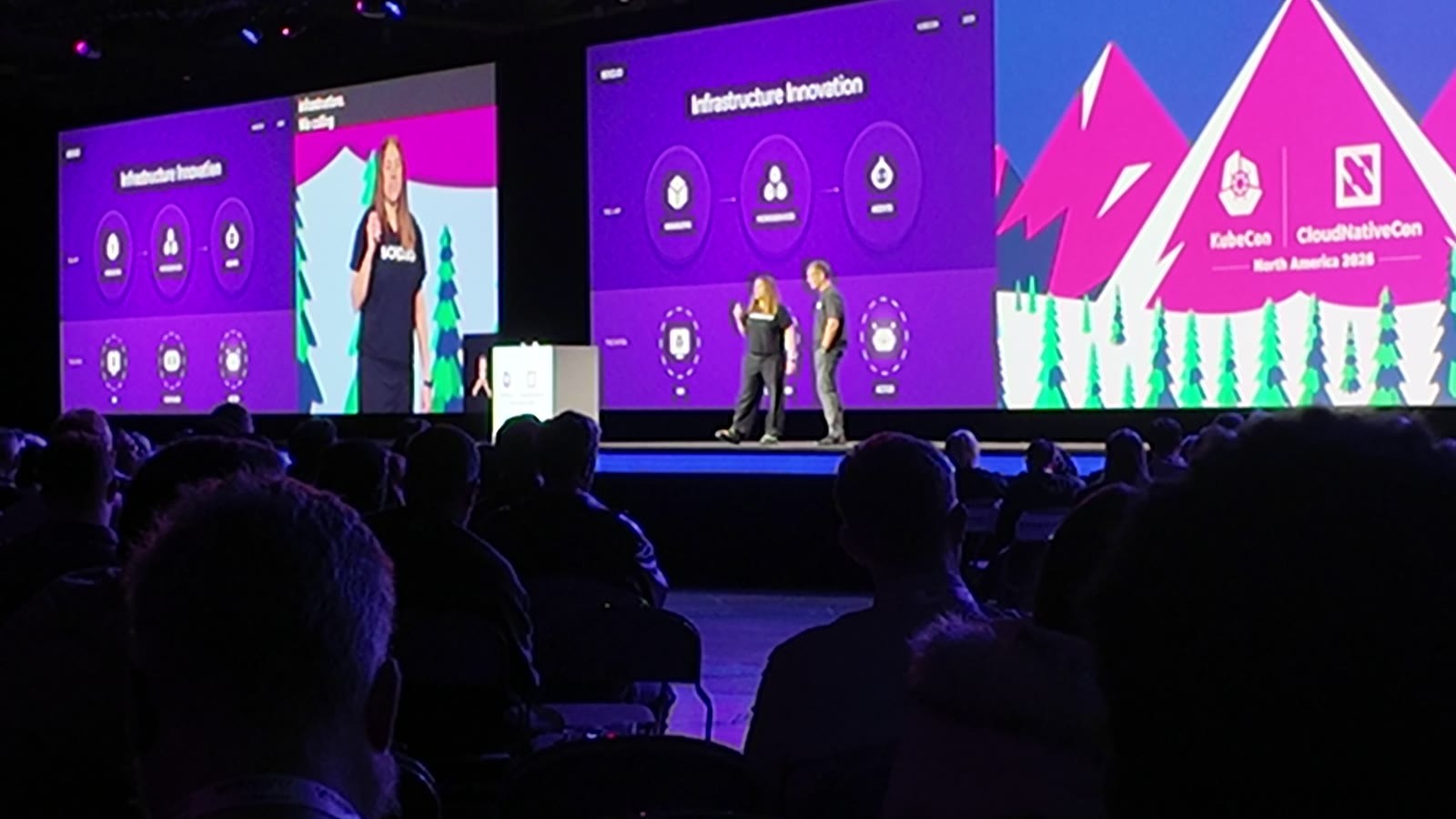
They began their answer by explaining what an agent harness actually is. It's a thin shell: the capabilities come from plugins for tools, skills, and models, and everything the agent needs lives in the file system. That's good news for infrastructure people, because it means the agent can be put somewhere. The usual control, asking a human to approve each action, has two problems. Most users end up clicking yes, and platform and security teams shouldn't have to bet on that. So the proposal is to put the agent in a sandbox, where even a compromised one can only touch its own files, and send every bit of traffic in and out through a gateway like agentgateway, the data plane for agentic traffic. A sandbox plus a gateway is the building block. They call it an actor.
Then the question of where actors run. Today, they mostly run on laptops, in harnesses like Claude Code, Codex, and VS Code. Every session in a harness is an actor, so multiply by every laptop at a company and you get millions of them, plenty connected to production data and APIs. Agent Desktop is an open source project that brings the sandbox-and-gateway model architecture to the desktop. It features unified central inventory and configuration for harnesses, tools, and skills, and all agent traffic is routed through agentgateway. For Kubernetes, the answer is Agent Substrate.
Updates that came with it:
- agentgateway manages LLM, MCP and A2A traffic, and has 600+ contributors from 160+ organizations.
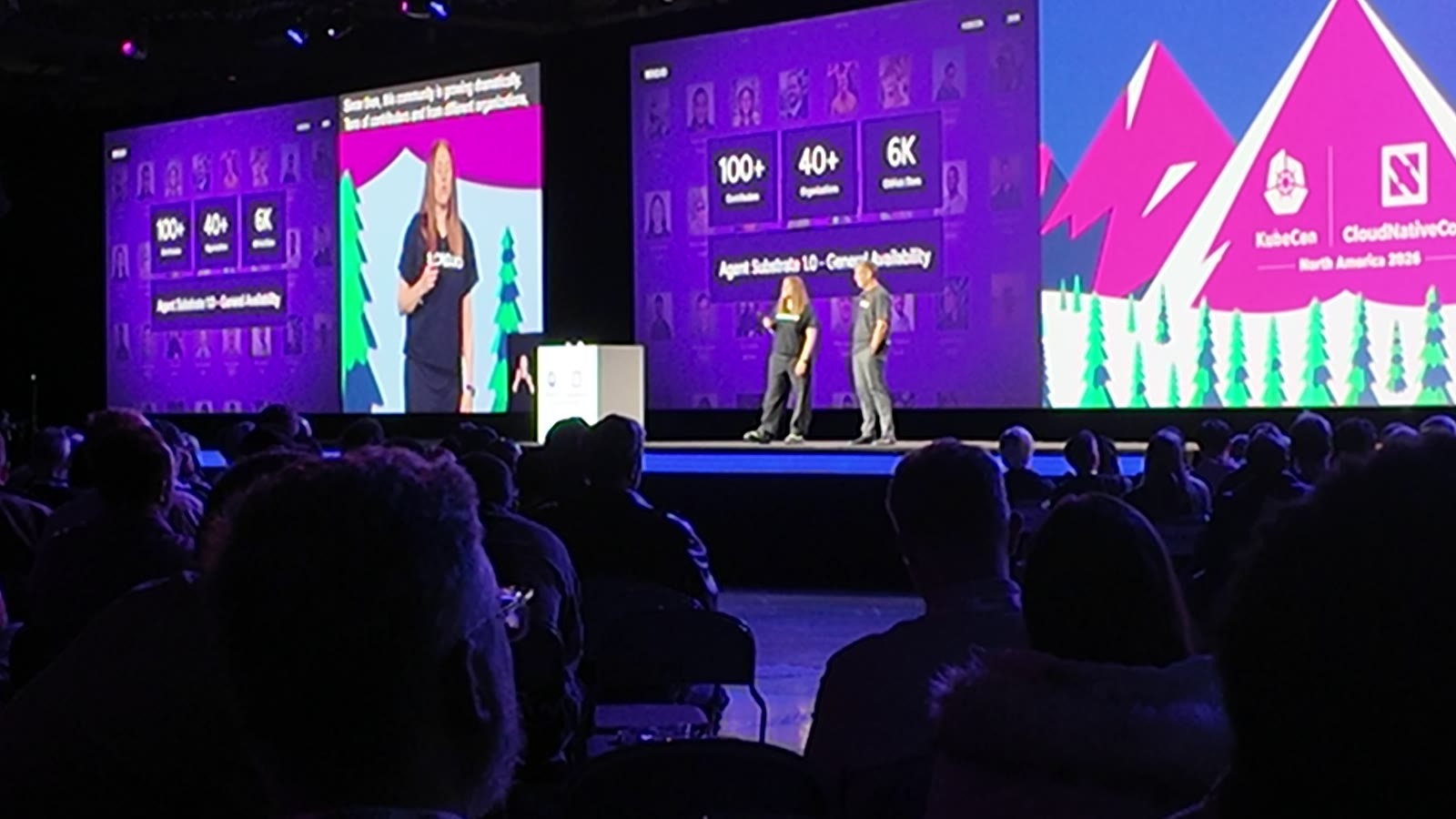
- Agent Substrate released 1.0 and is generally available in under six months, with 100+ contributors, 40+ organizations and 6K GitHub stars. The project started at a July offsite in Seattle, with Googlers around the table.
- It's already in production. Swissquote and OutSystems are running Agent Substrate with agentgateway, and the keynote slide quoted both. OutSystems' point is that at their scale, it is not possible to have a dedicated pod for each agent.
- The scale slide pointed at billions of actors, roughly 10x density and wake-up times on the order of 100 ms, and a self-service sizing calculator now lives on the kagent community site.
- kagent 1.0 is now GA and has been fully rebased on Agent Substrate. It's the last mile, the developer experience and governance for agents on top of the infrastructure, which kagent has filled for the community for two years.
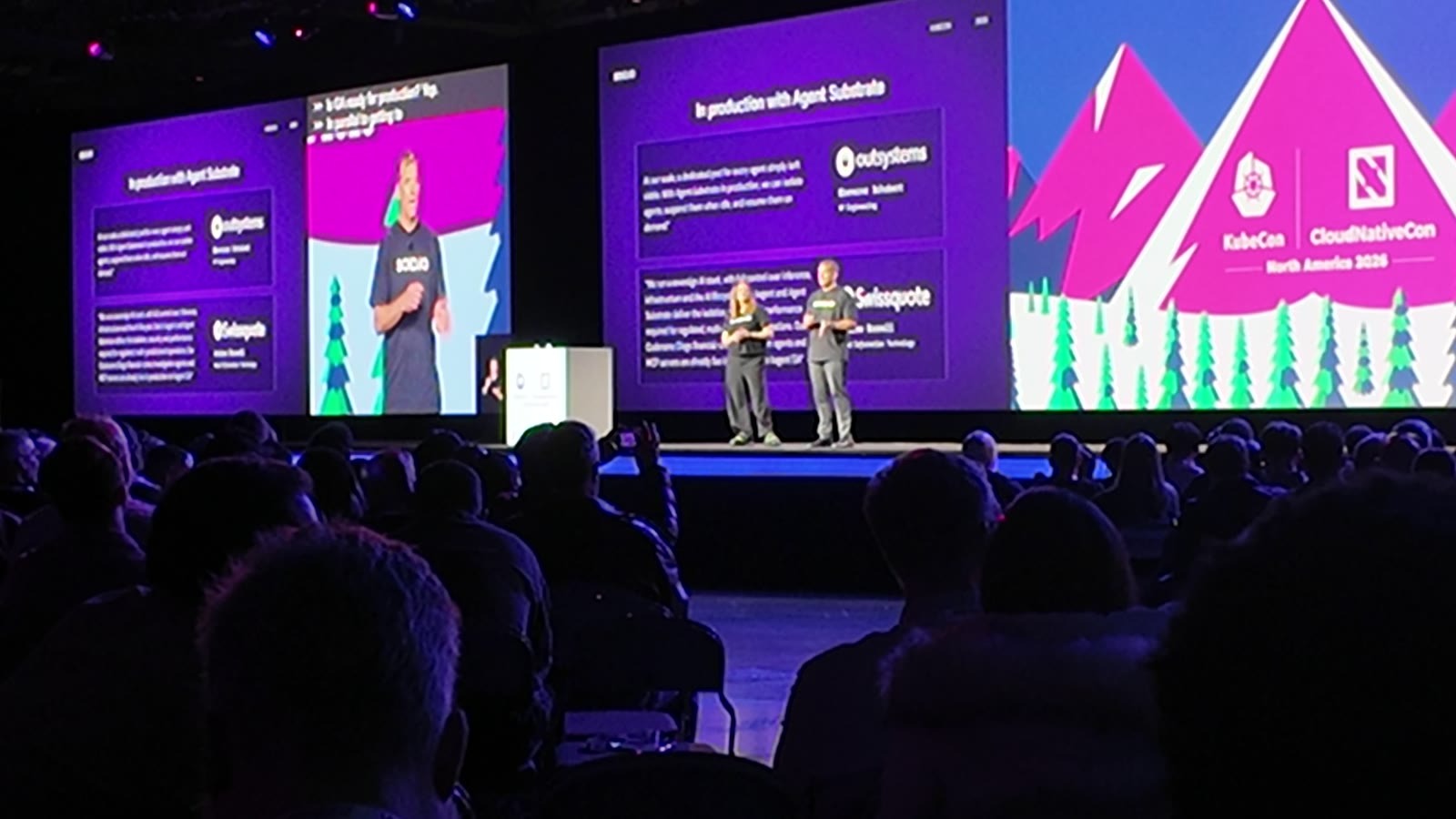
They closed with a shout-out to the three CNCF projects involved (Kubernetes, Agent Substrate and kagent), an invitation to the booth, a note that the Agent Substrate book had just come off the press, and a reminder about the community party that night.
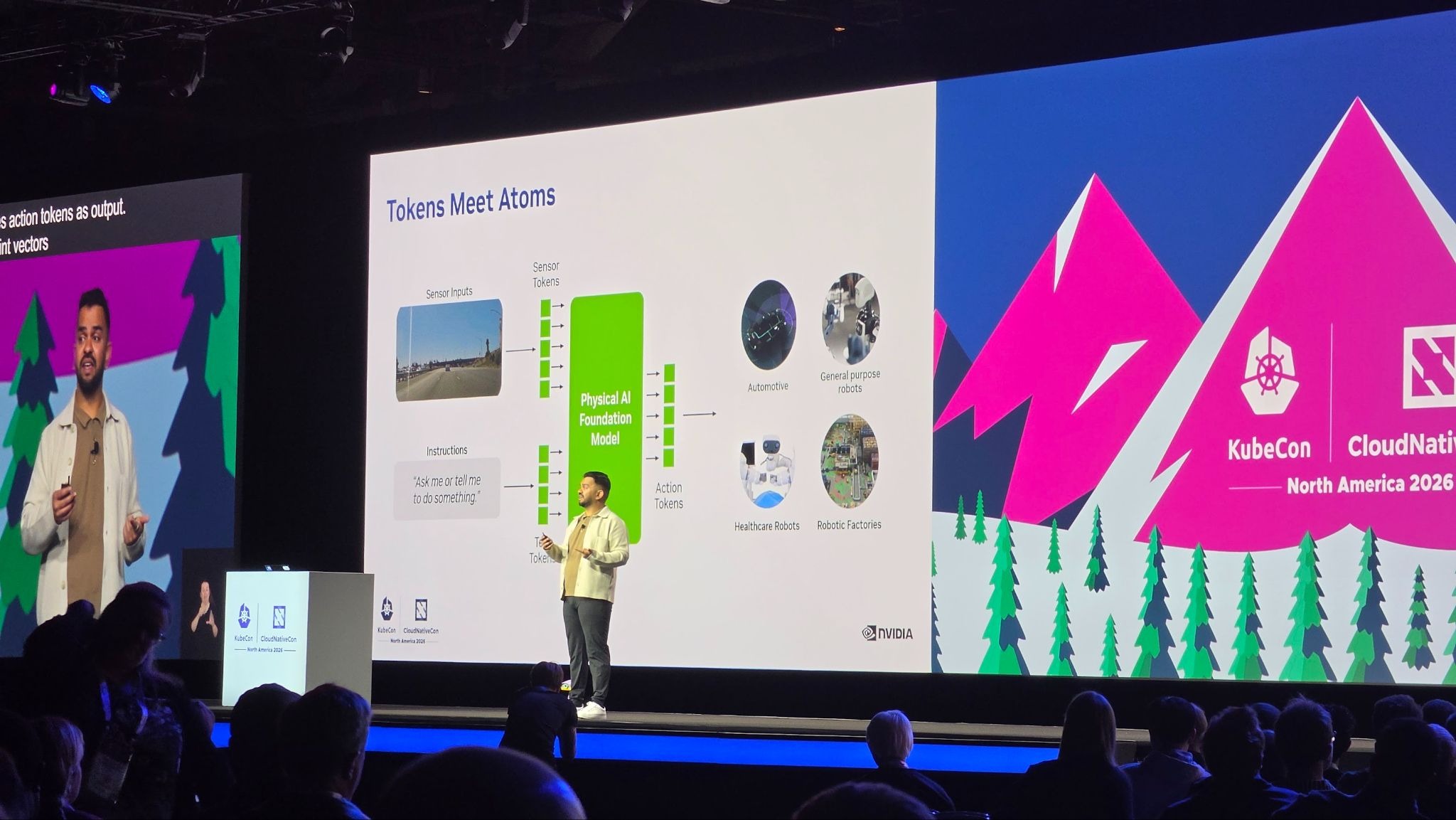
The rest of the keynote block was heavy on infrastructure. Nvidia said agents now generate 89% of tokens on OpenRouter, up nearly 37x since February, and announced it's donating OpenShell to the CNCF. Red Hat presented the case for policy that lives outside the agent. Google Cloud went through agent identity with SPIFFE/SPIRE and proxies like agentgateway. AWS showed 100,000-node clusters, including a 10 GB image pulled in less than 45 seconds.
Then came the breakouts. Solo had a lot of them:
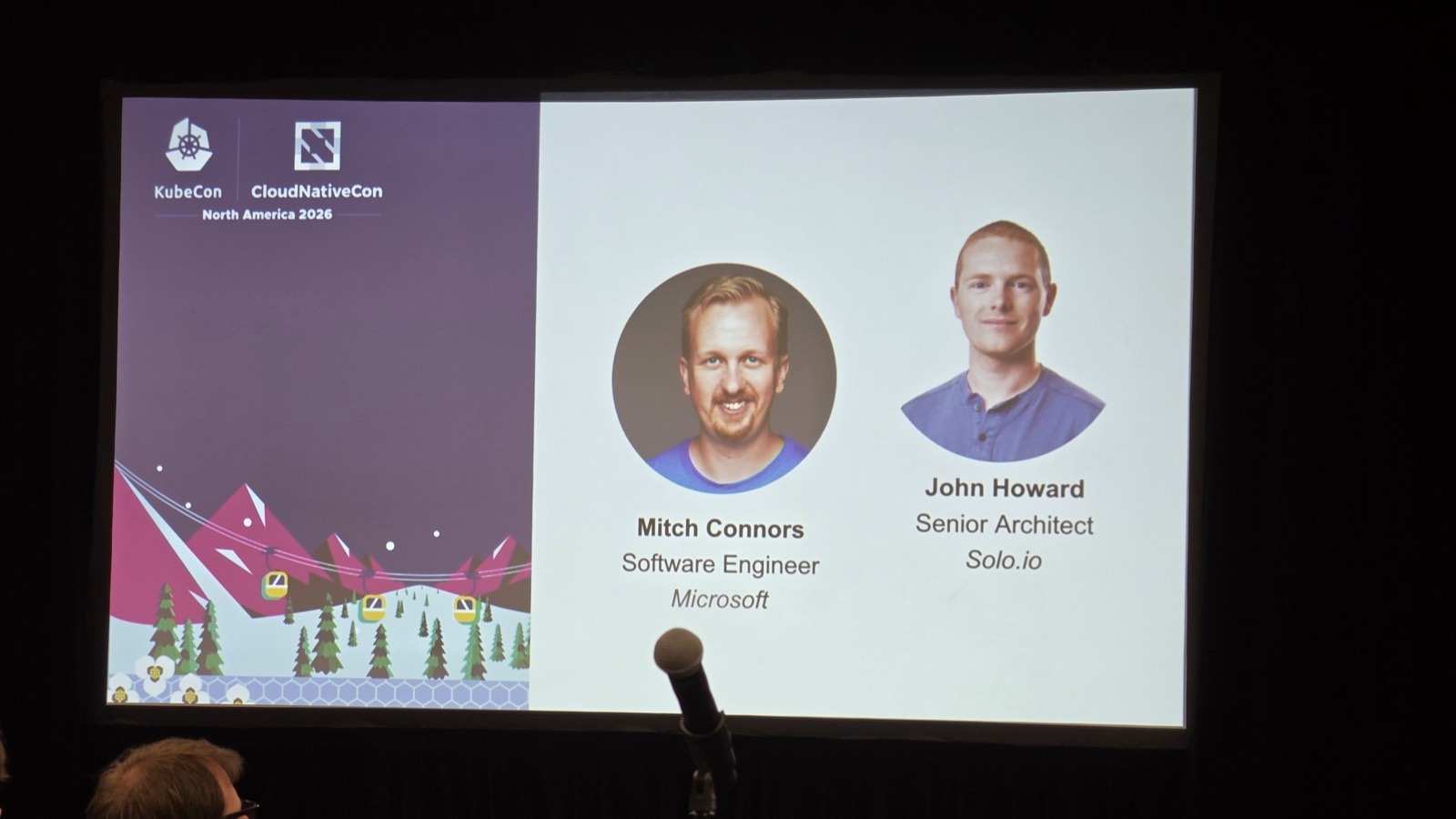
Will Your Gateway Leave You High and Dry? John Howard from Solo and Mitch Connors from Microsoft took on a problem everyone running a mesh or gateway eventually hits: what happens when routes change under live traffic and how routability works for each address. Good crowd, many laptops open.
New Traffic, New Rules: Standardizing AI-Aware Networking in Kubernetes. Keith Mattix from Solo and Nir Rozenbaum from NVIDIA, in the Maintainer Track. It ran at the same time as the Gateway API talk, which is the kind of scheduling conflict that makes people jealous of clones.
Demo Theater: DO NOT Give AI Agents Credentials! Christian Posta, presented his talk at the expo hall demo theater.
Two more in the afternoon. Dolis Sharma covered The New Scaling Matrix on balancing in-place resizing, VPA, HPA, and automation. Ian Rudie also ran the Istio Contribfest, Set Sail with Istio, with contributors from Ericsson, Red Hat, and Microsoft.
Lessons Learned Sandboxing Agents with kagent. Peter Jausovec, Nina Polshakova and Eitan Yarmush on their experience of building sandboxing into kagent. Actor identity has to remain stable when compute moves around. A suspended agent is just stored data, with the session state sitting as files in a bucket, and the sandbox runtime becomes a data format, because snapshots only restore onto a matching runtime. The live demo ran Substrate on Kubernetes through the kubectl plugin with two separated sessions, egress denied by default, then a dynamic policy applied at runtime that turned a blocked request into a successful one.
On the expo floor, the booth was packed after the keynotes. Christian signed copies of Agent Substrate: From Pods to Sandboxes there, the first of two signing days, while labs to get started with Solo.io technology ran on 14 laptops.
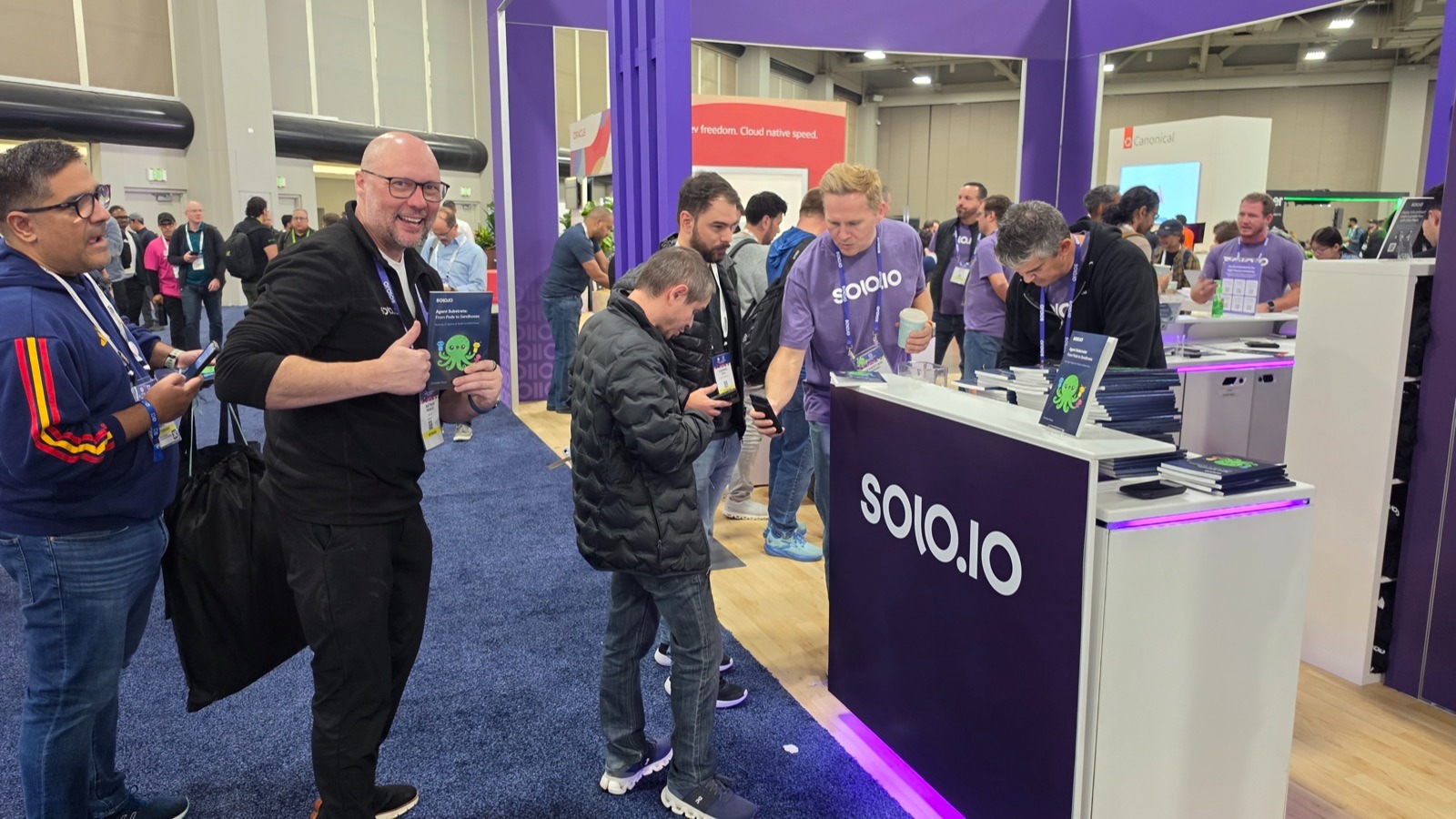
That night, the Agent Substrate Community Party filled the venue, with the octopus on the big screen.
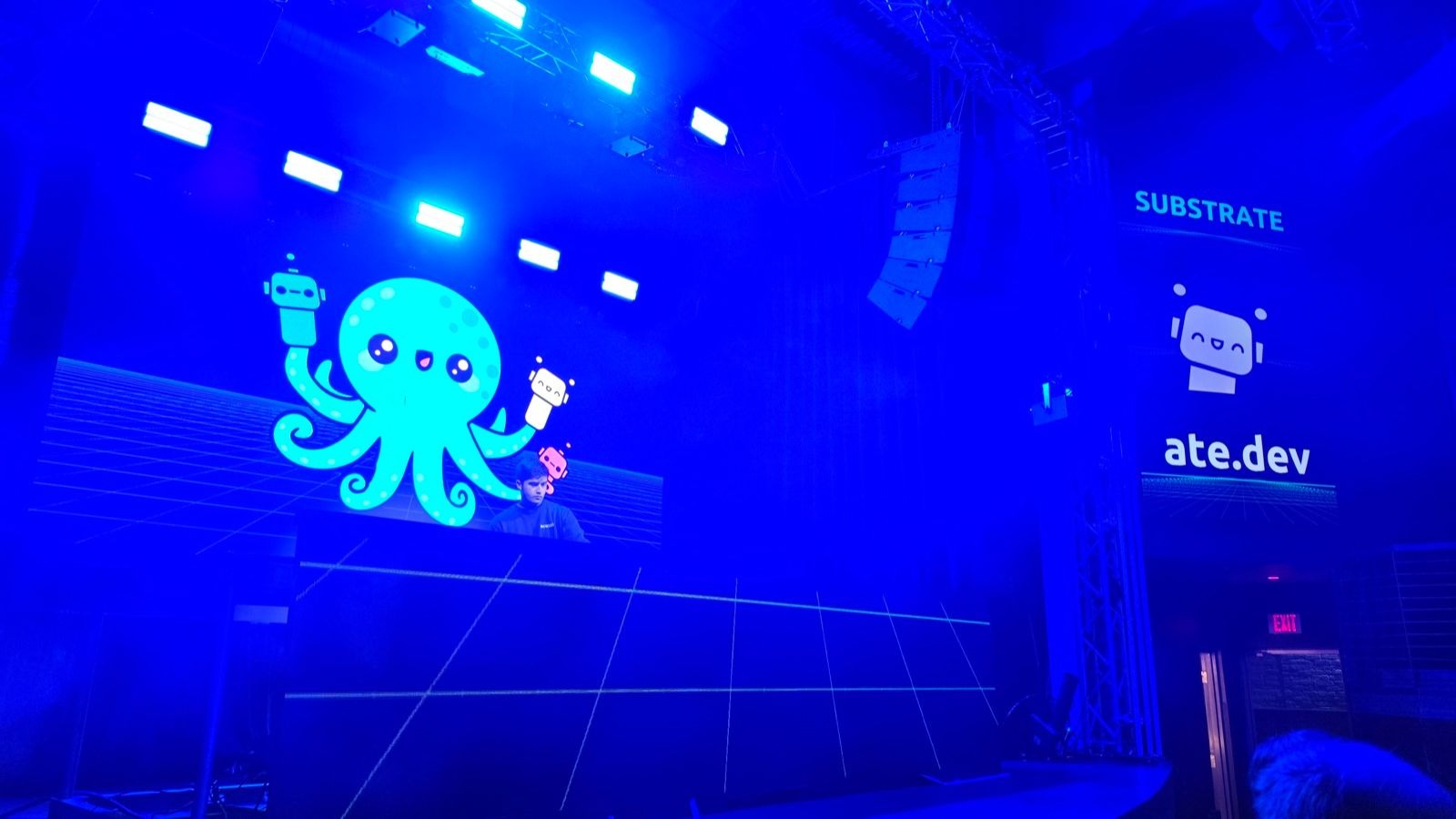
Wednesday, Nov 11: agent speed and the Substrate deep dive
Wednesday's keynote reframed the conference. The world is built for human speed and now runs at agent speed. Anthropic shared early data that agents already work about 6x the hours humans do, and agents account for around 70% of trackable inference traffic. They don't follow human caching patterns, and one request from a person can branch out into many.
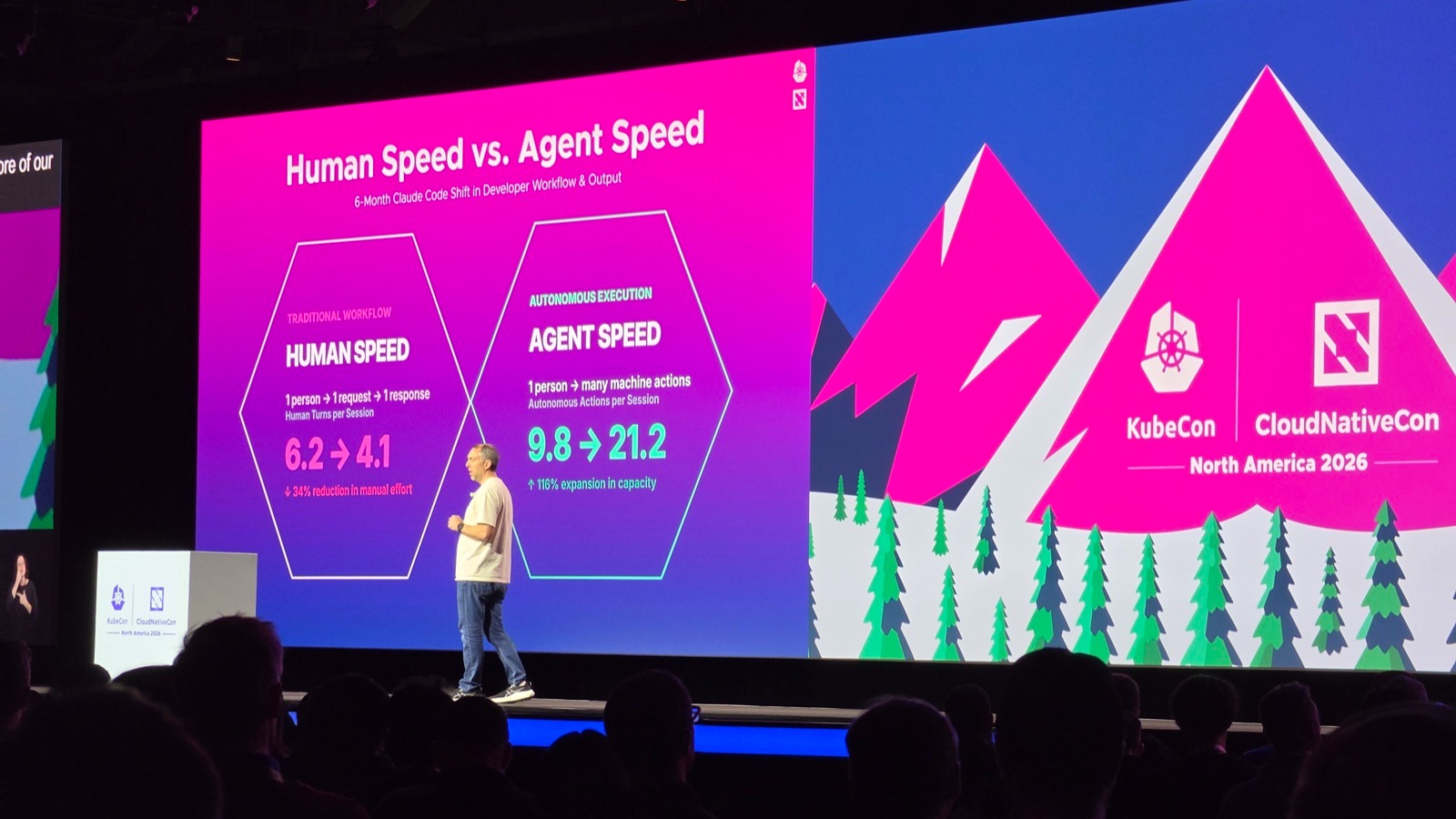
The rest of the keynote was end-user stories. CVS and Access Group showed internal platforms that hide Kubernetes complexity, and CVS's goal was a new hire shipping to production on their first morning. Meta moved from a Terraform monolith to GitOps with Argo CD for its AI infrastructure and cut deploy time from four-plus hours to minutes. Apple demoed Apple Container for running containers and clusters on a Mac. Anthropic is donating 3,000 Claude codes to CNCF maintainers at claude.ai/cncf, and Uber is open-sourcing Michelangelo.
Solo's Wednesday sessions:
2,000+ Customer Calls About AI in Production: Here's What You Need to Know. Michael Levan delivered his session in the poster pavilion.
Pods Are Not Enough for AI Agents, Meet Agent-substrate. Christian Posta. His argument: Kubernetes was built around stateless, horizontally scalable microservices, and agents break that in three ways. They write unknown code at runtime, accumulate task-specific state, and sit idle most of the time. Map each one to a pod and the control plane takes the hit.
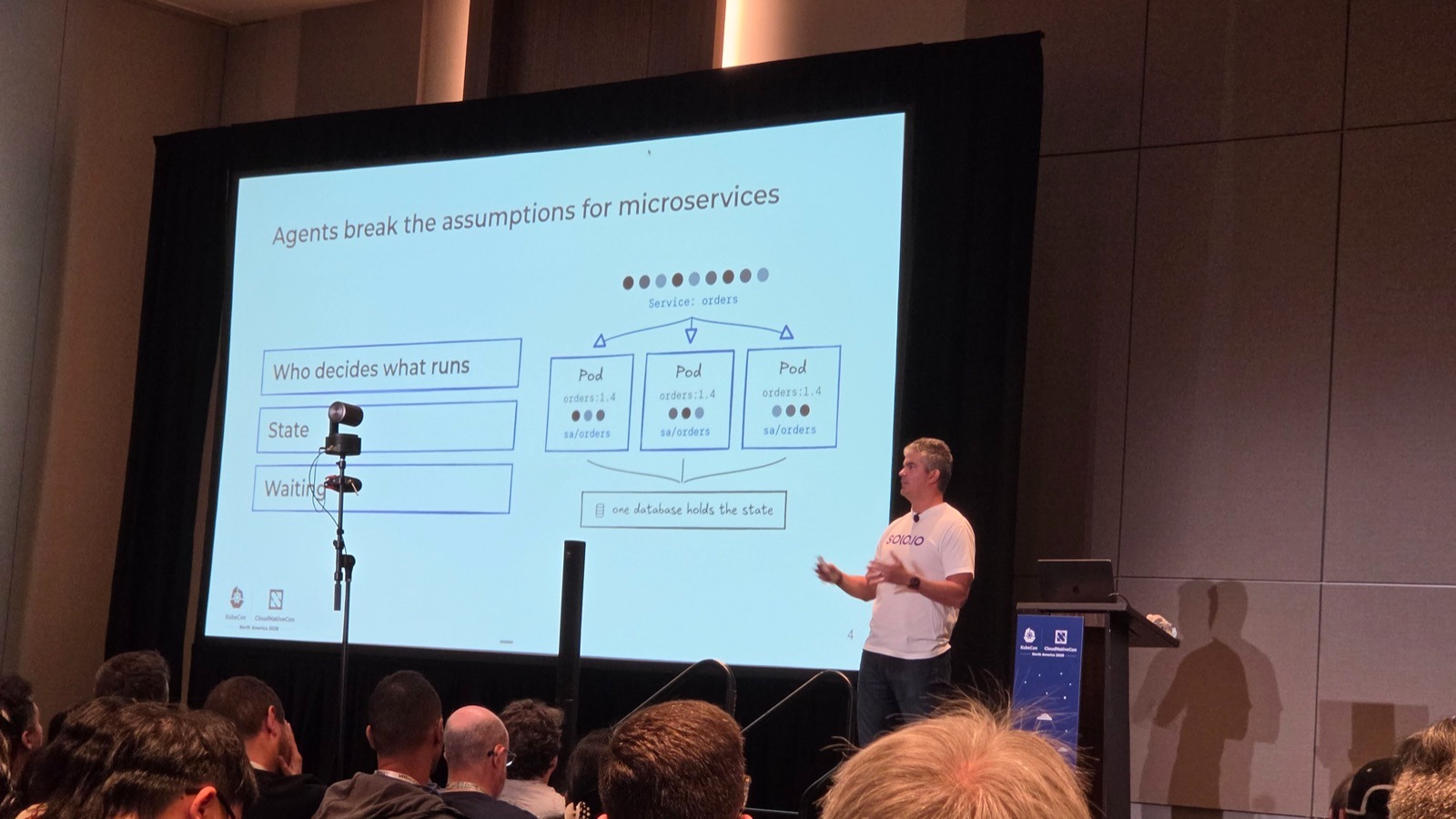
How it works: a pool of workers provides the compute, an actor template defines a baseline agent, and an actor is an instance monitored by Substrate itself and not a Kubernetes resource. Idle actors are persisted to S3-compatible or GCS storage, and a request restores them to whatever worker happens to be free. The amount of state stored is configurable: just the root filesystem, filesystem and workspace, or the whole memory.
The security section is worth reading twice. Sandboxes are treated as hostile from the start, and all egress is blocked unless a policy allows it. The actor never gets the credentials. Agentgateway intercepts outbound calls and injects the right OAuth token or PAT based on policy, with secrets kept in OpenBao. Actor identity travels as a JWT on egress, so two actors sharing a worker still show up as two separate callers in the audit trail. The demo made that point well, with both actors calling source control and each one being attributable. Kagent sits on top for conversations, MCP servers, snapshot timing, and safe rollouts, while Substrate ships as a Helm chart dependency.
ServiceEntry Visibility: Tomorrow's ServiceEntry, Today. Ian Rudie, at Istio Day in the Cloud Native Theater.
Feeling Lost? A Newcomer's Guide to the Gateway API. Ian Rudie and Microsoft's Mike Morris, in a birds-of-a-feather session for newcomers.
Book signing, round two. The booth hosted a second signing on Wednesday, this time with Lin Sun joining Christian Posta.
Thursday, Nov 12: the foundation holds
The final keynote was a good counterweight to a week of agent excitement. The message: cloud native is AI-native. That’s precisely what agent workloads need: small blast radius, rapid rollback, sandboxing, and API-first design. Anthropic's analysis of 200,000 internal coding sessions found agents now take 21 actions before a human steps in, up from 10 six months ago.
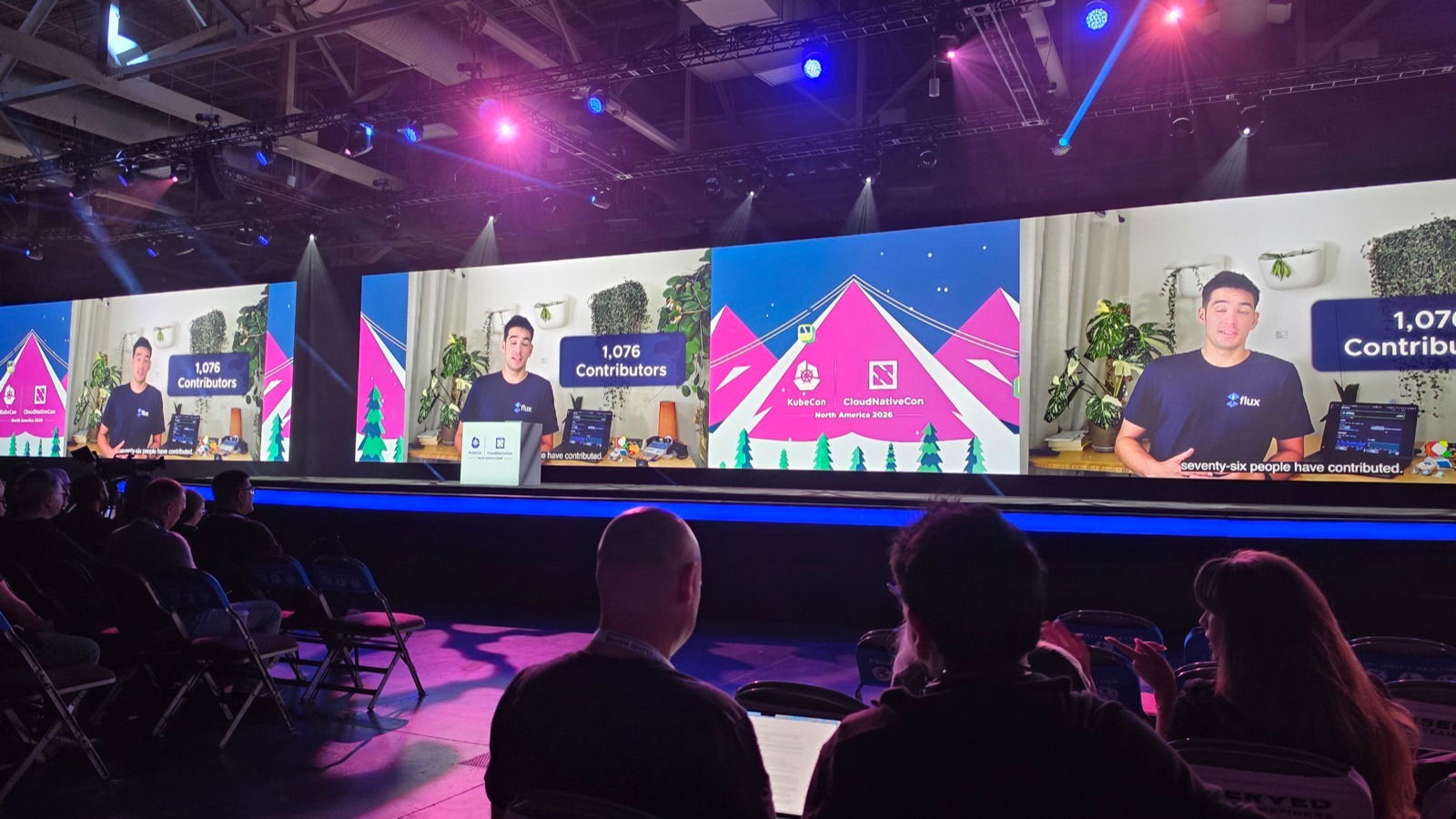
Some stats to note: 21 million people are building cloud native, the first time it’s crossed over 20 million. 82% of container users run Kubernetes in production, and two thirds of organizations host generative AI models on it. And 44% of Kubernetes users don't run AI on it yet, with only 7% deploying models daily. Kubeflow graduated, Microsoft open-sourced Agent Sessions and Agent Suites for replayable, auditable agent runs, and Heroku shared how it runs 20,000+ apps on Kubernetes using Cloud Native Buildpacks.
Solo's Thursday sessions:
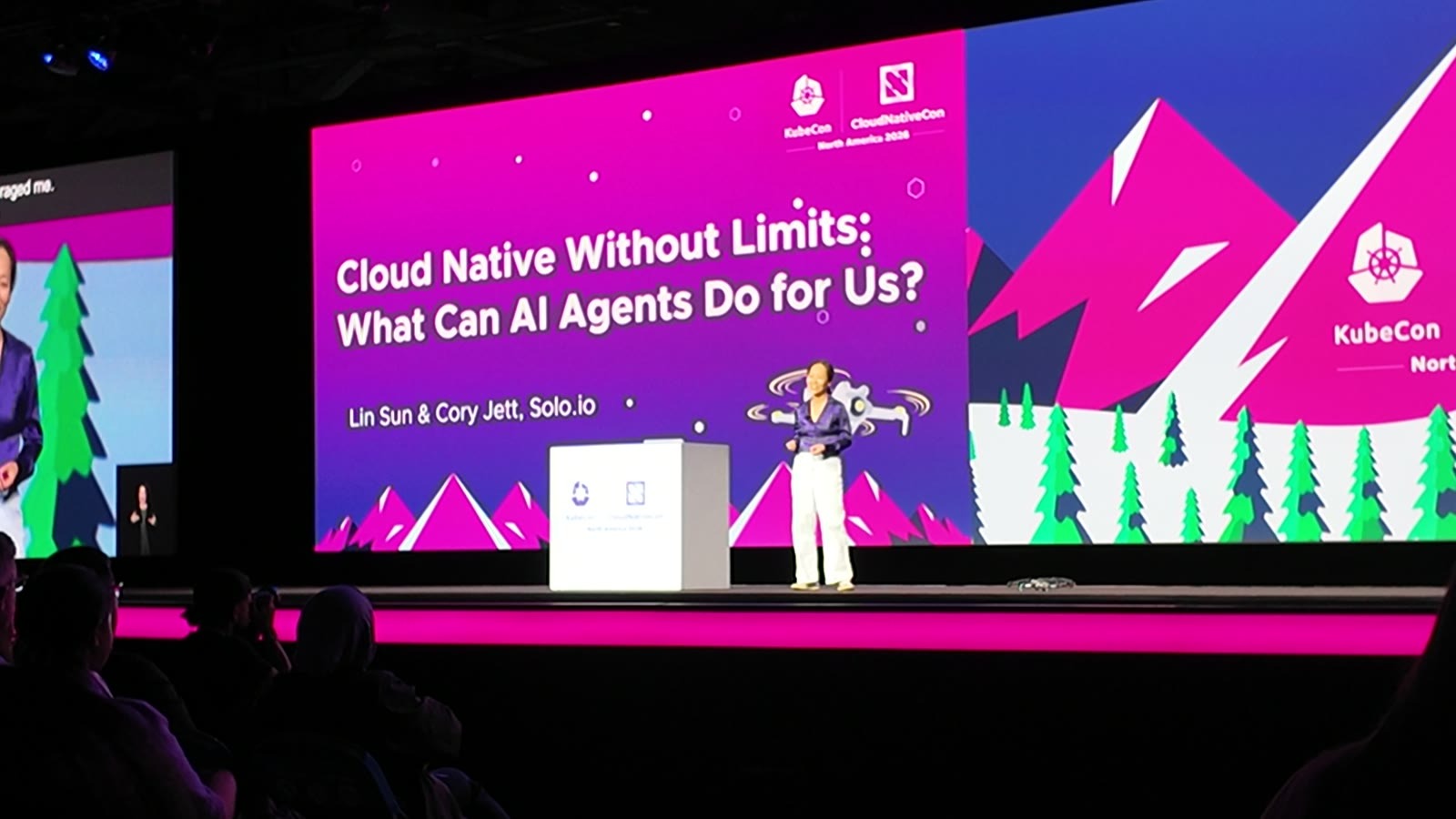
Cloud Native Without Limits: What Can AI Agents Do for Us? Lin Sun, Solo's Head of Open Source, closed the keynotes with a live demo. Back in March for KubeCon Europe in Amsterdam, she flew a drone on the keynote stage, and the camera never made it to the big screen. She had an actual pilot, Cory Jett, with her this time, and the camera worked.
The setup was a repo called Imagine, deployed through Argo CD to a Kubernetes cluster running agentgateway, Agent Substrate, and kagent 1.0 (GA two days earlier), a few MCP servers behind an MCP gateway, Keycloak, OpenTelemetry, and Jaeger. The demo began with her agents not running. They are suspended with Agent Substrate and wake when they are needed. She pointed out the worker pool, two replicas, serving potentially many more agents than that.
Then the lights came up on the audience, the drone captured the room, and the picture landed on her laptop. The goal was to make the crowd fly without limit. A "studio" of agents took the photo and got to work, a director and a scout among them, resuming from snapshots in well under a second.
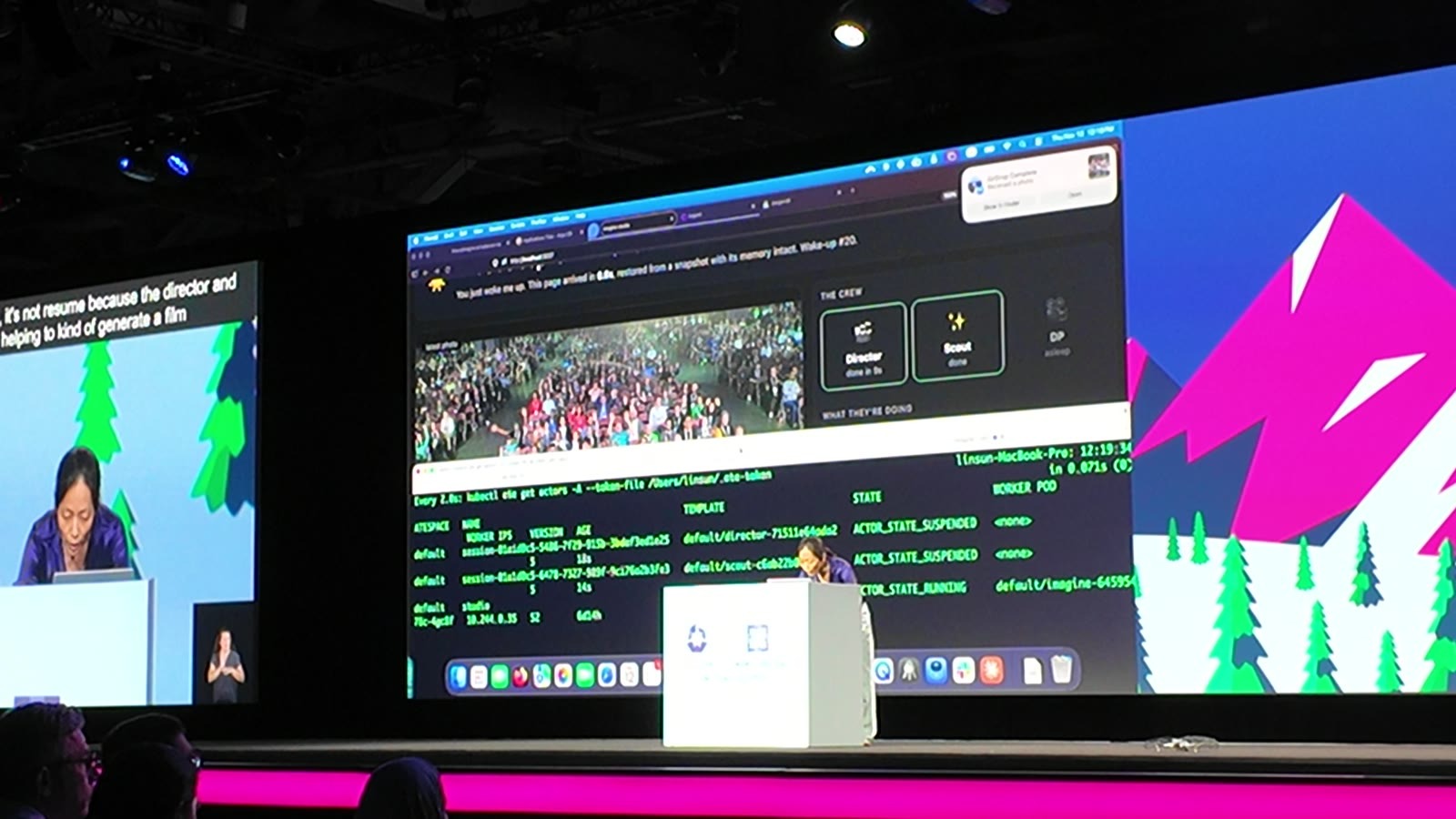
At the beginning, it didn't go perfectly, and that was part of the fun. Something failed along the way, so Lin handed the problem to a platform agent in the kagent UI. The agent opened a pull request through GitHub MCP tools, raising a token limit enforced by agentgateway to one million per hour, and Lin asked the room to review it. The audience said it looked reasonable, and she approved the PR live. She noted that some actors were sharing the same pod, which is how Substrate is meant to work.
Then the film. It took about 45 seconds for Google's video model to generate it, and traces later showed that this was where most of the time went. It rolled credits with the audience as the cast, and the room cheered. Publishing the film to the GitHub repo went through an MCP server sitting behind agentgateway, so Lin had to log in first to get a token with the right audience and subject before anything went out. She pulled up the distributed traces to end the loop and show everything the agents had been doing, including the first failed attempt.
At the end, she counted five agents running on Agent Substrate, some of which were also running in kagent on top. Her final challenge to the room: What would you build tomorrow that you would not have thought of building yesterday?
Agentic + Cloud Native: Getting Started Contributing to Kagent. Lin Sun, Peter Jausovec and Eitan Yarmush, with Dmytro Rashko from Amdocs, ran a Contribfest for first-time kagent contributors.
Watch the sessions
Most of the sessions above were recorded, and the recordings should be available on the CNCF YouTube page in the coming weeks. If you missed one or want to dig further on a topic, that’s the place to start. A good order for the Agent Substrate material is "Pods Are Not Enough for AI Agents, Meet Agent-substrate" first, then "Lessons Learned Sandboxing Agents with kagent", and lastly the Agent Substrate keynote. If you’re into the Gateway API scene, pop on “Will Your Gateway Leave You High and Dry?”
Until next time
Thanks to everyone who came to Agent Substrate Day, stopped at the booth, sat through a session or argued with the team in a hallway.
Want to keep going?
- Run Agent Substrate and kagent in production with Solo Enterprise for kagent, and use the sizing calculator to estimate what suspending idle actors could save you.
- Put Solo Enterprise for agentgateway in front of your agent, MCP and LLM traffic.
- Tell the team what you're building: get in touch.
- Read Agent Substrate: From Pods to Sandboxes by Christian Posta.
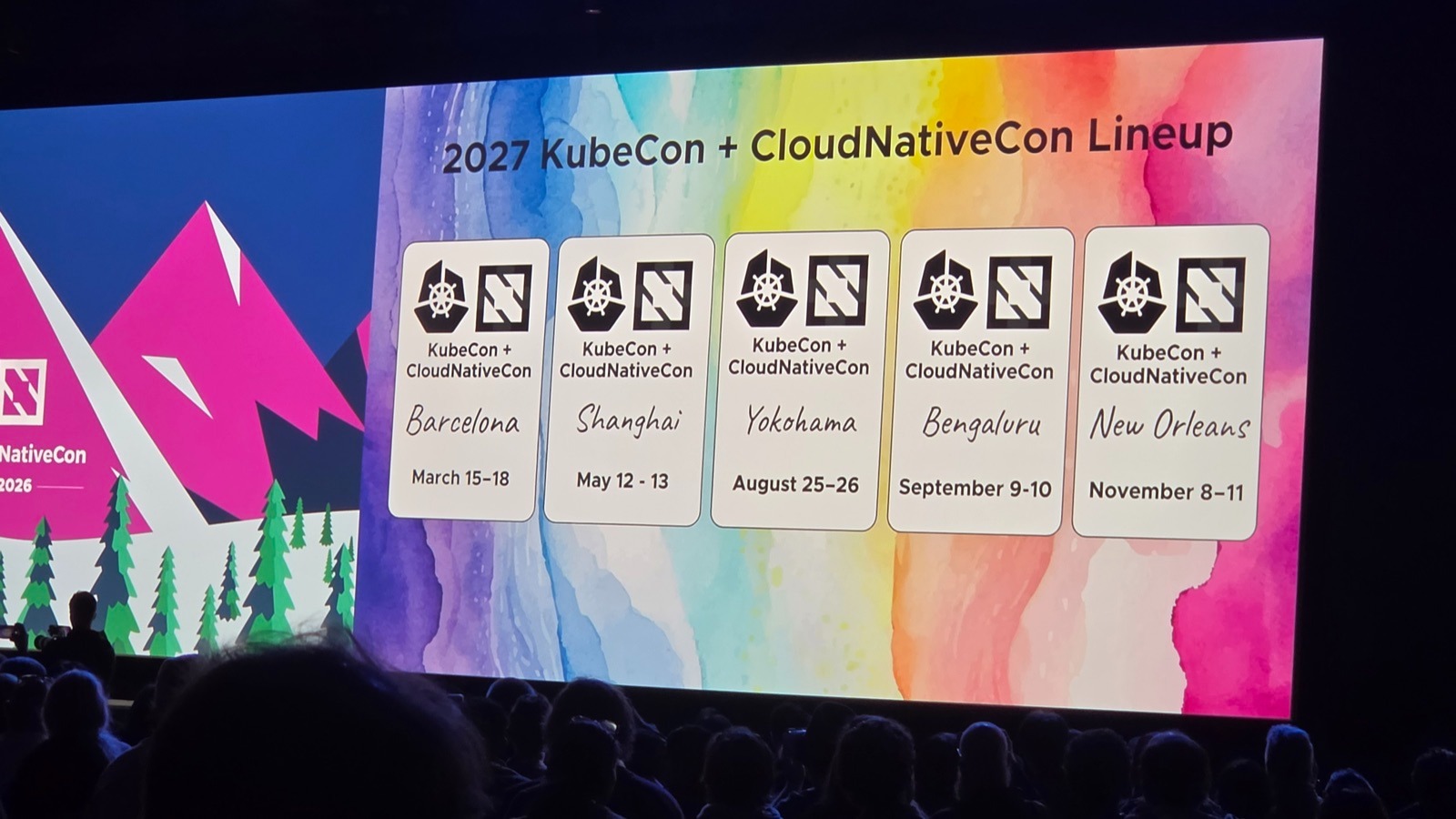
See you in Barcelona.