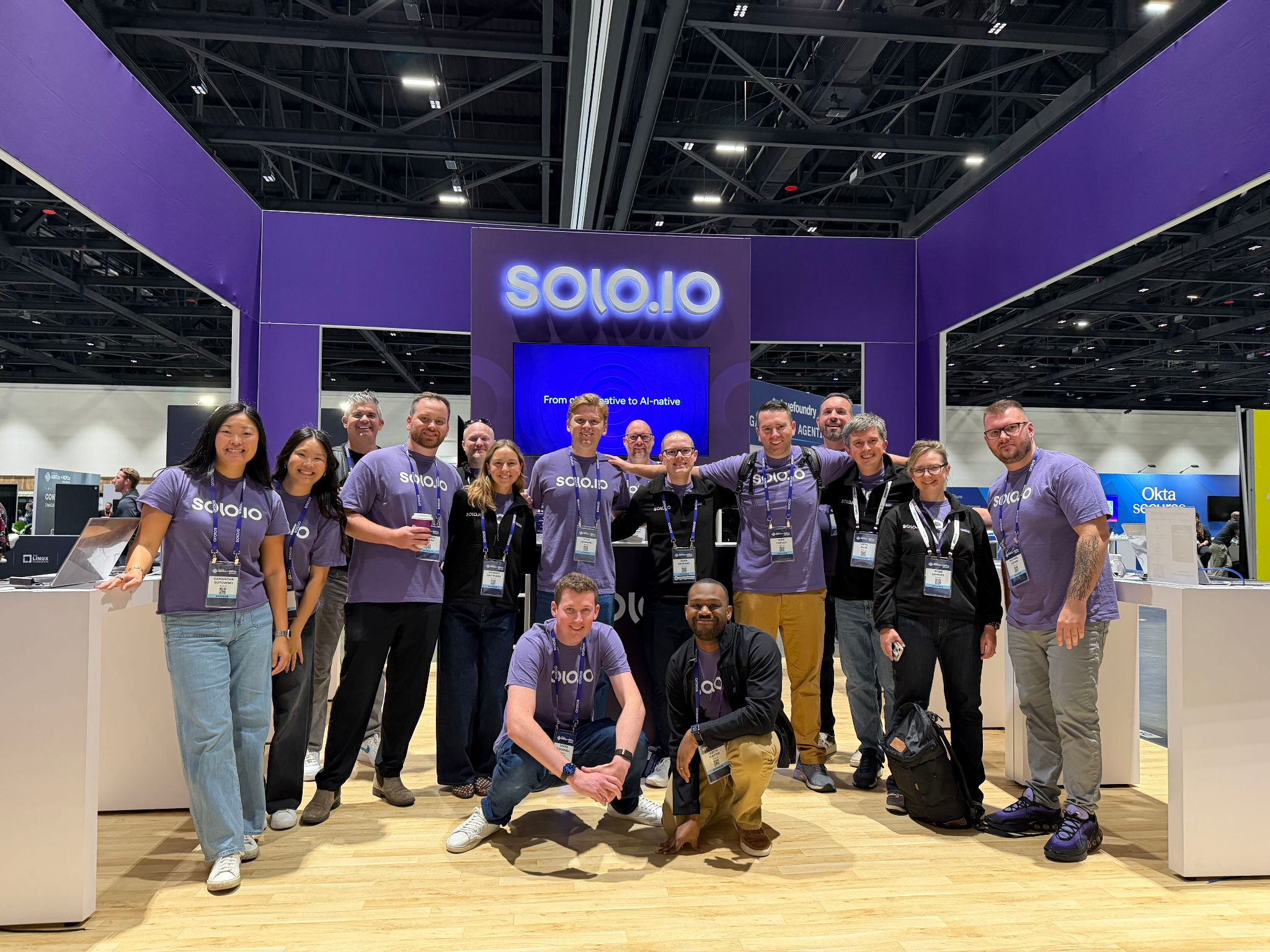
The very first AGNTCon + MCPCon North America is in the books! We spent the last two days in San Jose catching up with the open source community, sharing some exciting new projects, and talking about one of the biggest challenges facing organizations today: how do we take AI agents from experimentation to production, securely and at scale?
There's a lot happening in the agentic AI space right now. New frameworks, protocols, tools, and projects seem to emerge almost daily. But one thing is becoming increasingly clear: building an AI agent is only part of the challenge. Figuring out how to connect, secure, manage, and operate those agents in real-world environments is where things get interesting. And that's exactly what we came to San Jose to talk about! Here's a recap of some of our favorite moments from the event.
Introducing agentshield: Assume Every Attacker Is an Agent
One of our biggest announcements this week was the introduction of agentshield, a new open source project that takes a different approach to securing infrastructure in the age of AI agents. Our Chief Product Officer, Keith Babo, introduced agentshield during his mainstage keynote, "Agents as Actors: Harnessing the Power of Agentic Infrastructure."
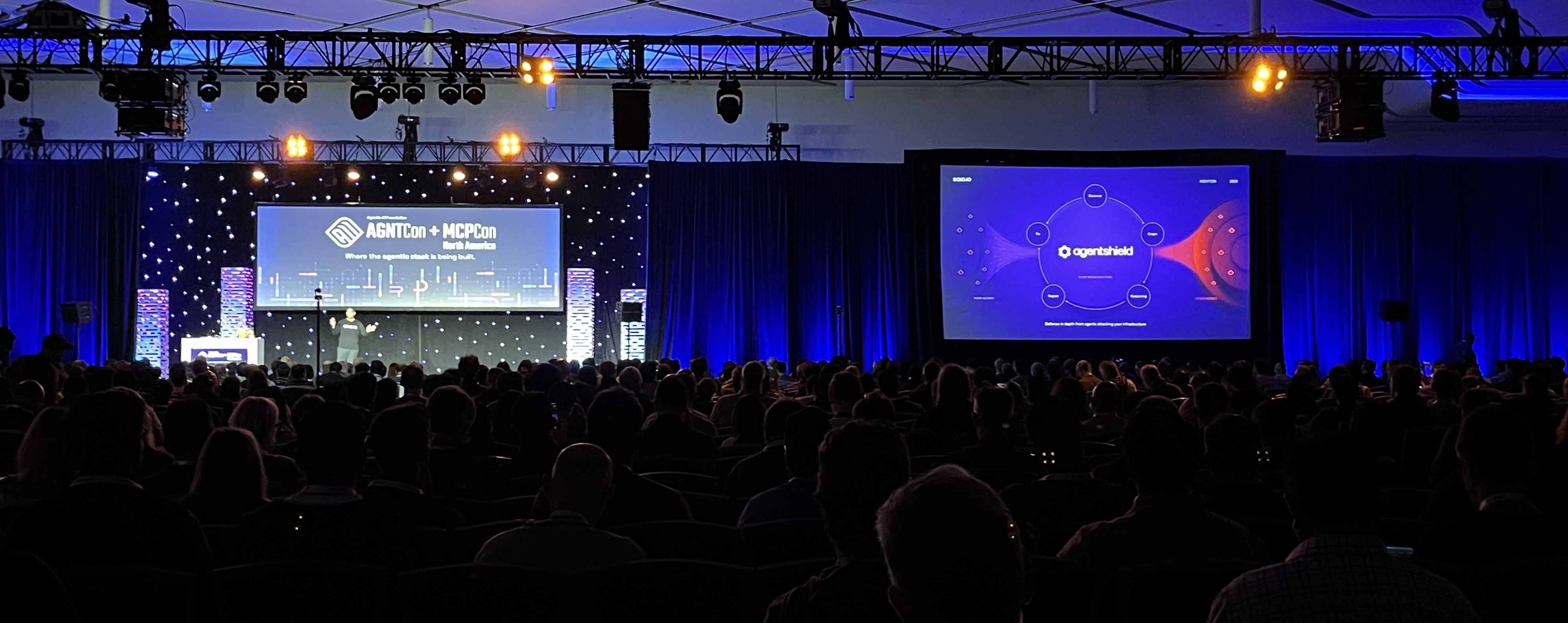
The idea behind agentshield starts with a simple but important distinction: there's a big difference between securing the AI agents you control and protecting your infrastructure from the agents you don't. Most conversations about agent security focus on the agents we're building and deploying ourselves. We give them identities, establish guardrails, restrict permissions, and control which tools they can access. All important things, of course.
But what about an attacker's agent? AI agents can discover vulnerabilities, move laterally between systems, and adapt their attacks faster than traditional security teams can respond. And unlike the agents you're running yourself, you can't simply put guardrails on an attacker's agent and expect it to follow them.
Instead of securing the agent, you need to secure what the agent can reach.
That's the thinking behind agentshield. It helps protect your existing APIs, services, data, and workloads by mapping potential attack paths, detecting threats, and proposing ways to remediate them at machine speed.
And importantly, it doesn't automatically make changes to your infrastructure. Remediation recommendations remain subject to human approval. It's a different way of approaching security, but one that makes a lot of sense as autonomous agents become more capable.
We're excited to see where the community takes this project, and we'd love for you to get involved.
Agentgateway: Taking Agentic Infrastructure Beyond Kubernetes
Of course, we couldn't come to AGNTCon + MCPCon without talking about agentgateway, which is an official project with the Agentic AI Foundation! We've spent a lot of time working with the community on the infrastructure needed to securely connect AI agents, MCP servers, tools, and LLMs. And as organizations move toward production deployments, it's becoming increasingly clear that agentic infrastructure needs to work across a lot more than just Kubernetes.
That's why one of the big things we highlighted at the event was how Solo Enterprise for agentgateway can run across different infrastructure environments, including standalone deployments with centralized UI management and enterprise MCP capabilities.
Why does this matter? Think about how organizations are actually adopting AI agents. A development team might be building agents on Kubernetes, while another team is experimenting with cloud-managed services. Developers may be using AI coding assistants on their laptops, and other teams might be connecting agents to internal APIs or external MCP servers.
These workloads don't necessarily run in the same environment, but they still need consistent security, access controls, observability, and governance. You shouldn't have to move everything to Kubernetes just to get those capabilities. Agentgateway helps provide a common control point for MCP, agent-to-agent (A2A), and LLM traffic, regardless of where the agents themselves are running.
Where Did All My Tokens Go?
One of the highlights was Shane O'Donnell's session, "Where Did All My Tokens Go? Using Agentgateway to Keep Your AI Usage Under Control."
If you've spent any time experimenting with LLMs, you probably know how quickly token usage can add up. And once you have multiple teams, agents, models, and applications making requests, figuring out who's using what, and how much it's costing, gets complicated pretty quickly.
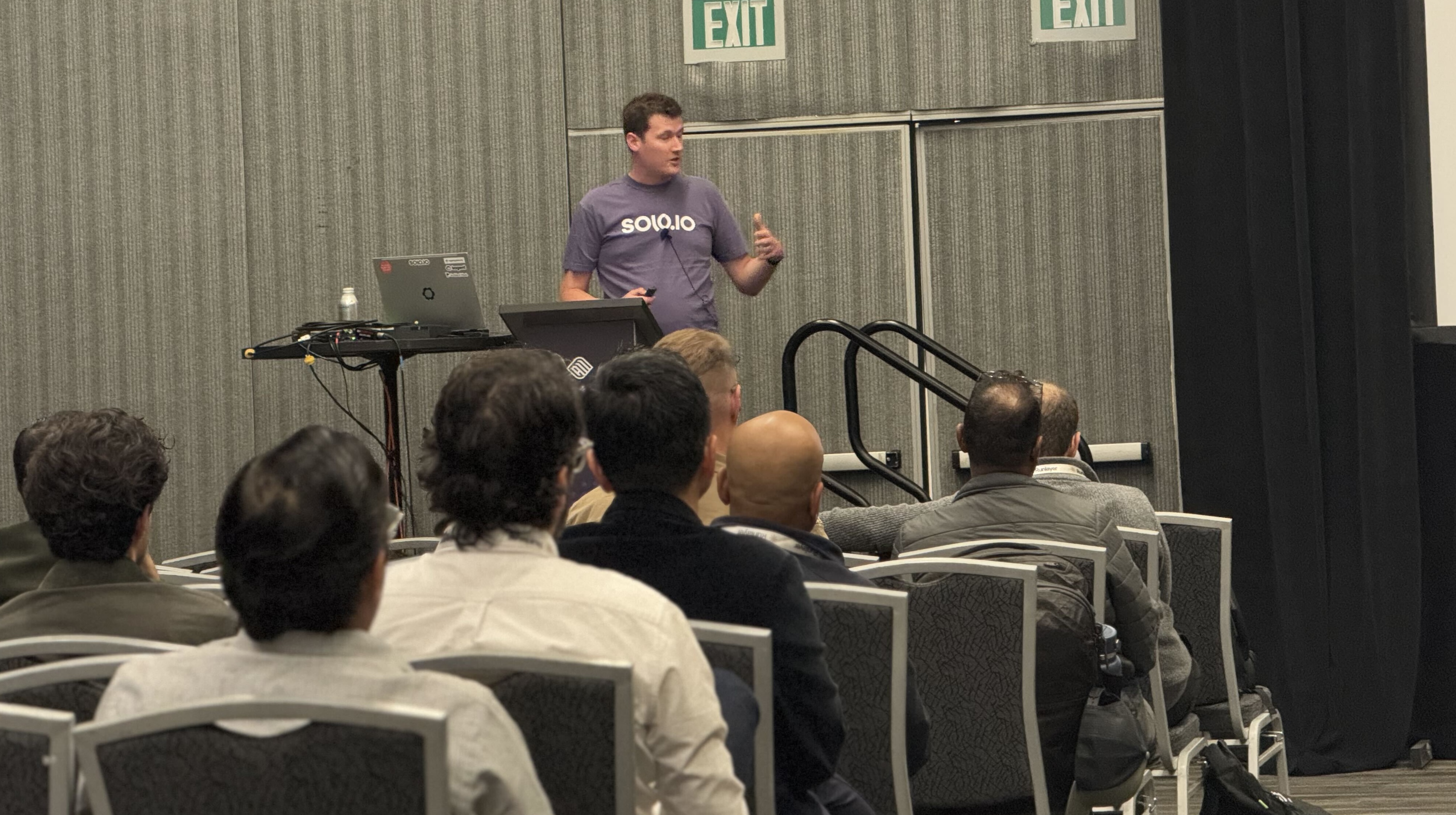
Shane showed just how easy it can be to get agentgateway up and running and start putting practical controls in place. For example, he demonstrated how teams can:
- Control which LLMs different users can access. Maybe one team needs access to a more expensive model for complex reasoning tasks, while another should use a more cost-effective option. Agentgateway lets you enforce those decisions through policy.
- Attribute AI costs more precisely. Instead of looking at one big LLM bill and wondering where all those tokens went, you can understand usage and spending at a much more granular level.
- Set rate limits based on spending. Rather than just limiting the number of requests, teams can apply controls that account for actual LLM costs, helping prevent unexpected spending.
- Manage these controls centrally. As more teams and applications adopt AI, there's real value in having a consistent way to apply policies without requiring every developer to build the same functionality into their applications.
What made the demo especially interesting was how quickly Shane was able to configure these capabilities. These are the kinds of controls organizations need when they're running AI in production, and seeing them come together in a live demo makes the benefits much more tangible.
Cost management is only part of the picture. Agentgateway also helps organizations address authentication, authorization, observability, and traffic management across their agentic environments.
It's exciting to see how far the project has come, and even more exciting to see the different ways people are starting to use it.
Getting Hands-On with Agentic Infrastructure
One of our favorite things about these events is the opportunity to move beyond slides and actually get hands-on with the technology. Throughout AGNTCon + MCPCon, we hosted opportunities for attendees to build and explore agentic infrastructure for themselves at our lab stations and workshops.
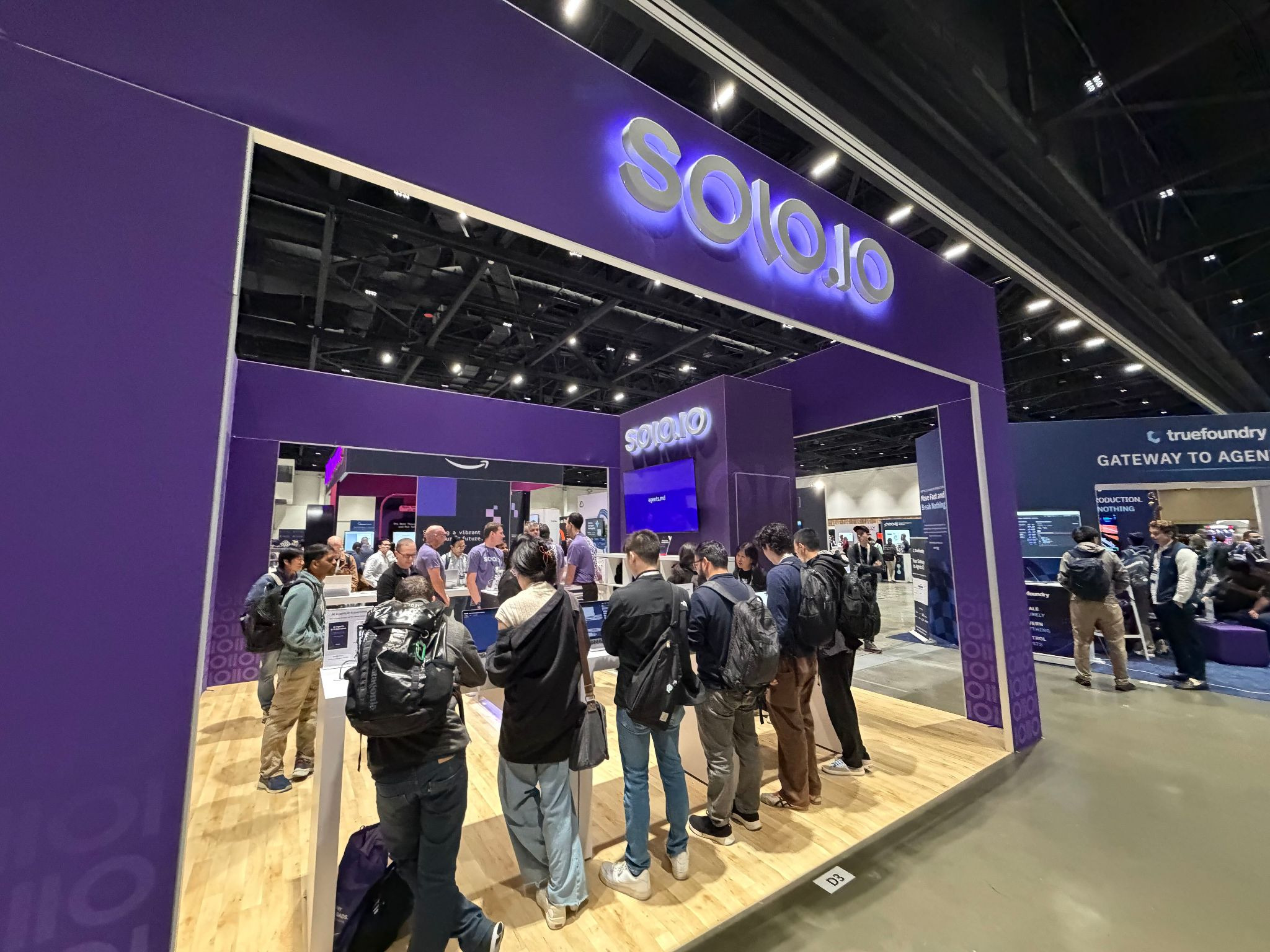
We also had some fantastic technical sessions from the Solo team.
Christian Posta presented "DO NOT Give AI Agents Credentials!" in the Demo Theater, tackling one of the trickier challenges in agentic systems: how to let agents access the tools and services they need without handing them sensitive credentials.
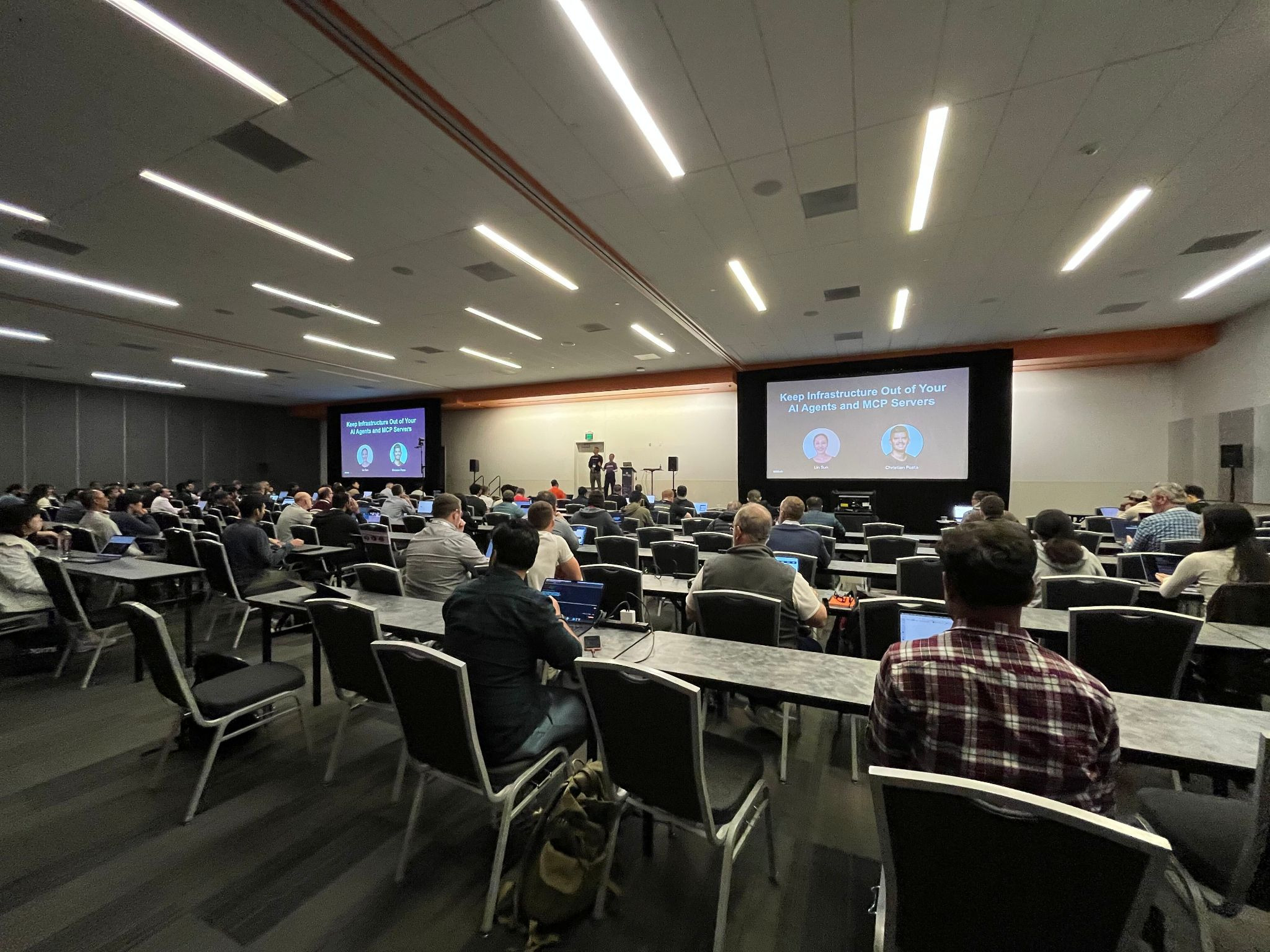
Lin Sun and Christian also led the workshop "Keep Infrastructure Out of Your AI Agents and MCP Servers," digging into how developers can separate infrastructure concerns from agent and MCP server implementations.
And for attendees looking to explore on their own, our hands-on technical labs offered a chance to experiment with open source agentic infrastructure. There's nothing quite like getting your hands on the technology, trying things out, and being able to ask the people building it questions along the way.
More Agentic Infrastructure: Agent Substrate, kagent, and agentdesktop
We also shared some of the latest work happening across our broader open source ecosystem.
Agent Substrate and kagent are helping address some of the challenges of running AI agents at scale on Kubernetes. Unlike traditional applications, agents can have very different execution patterns and resource requirements. They may need to start quickly, run for a short period, execute in isolation, and scale dynamically.
Agent Substrate and kagent help make those workloads more practical to run, with secure isolation, efficient resource utilization, and support for scaling agent workloads.
We also highlighted agentdesktop, our open source project focused on visibility, policy, and management for AI tools running across desktop environments.
As AI agents become part of everyday development workflows, knowing which agents, MCP servers, skills, and models are running across an organization is becoming increasingly important. It's exciting to see how these projects are coming together to address different pieces of the agentic infrastructure puzzle.
A Very Long Book Signing Line (and a Well-Deserved Award!)
It wouldn't be a proper Solo event recap without mentioning a few of the people who make this community so special.
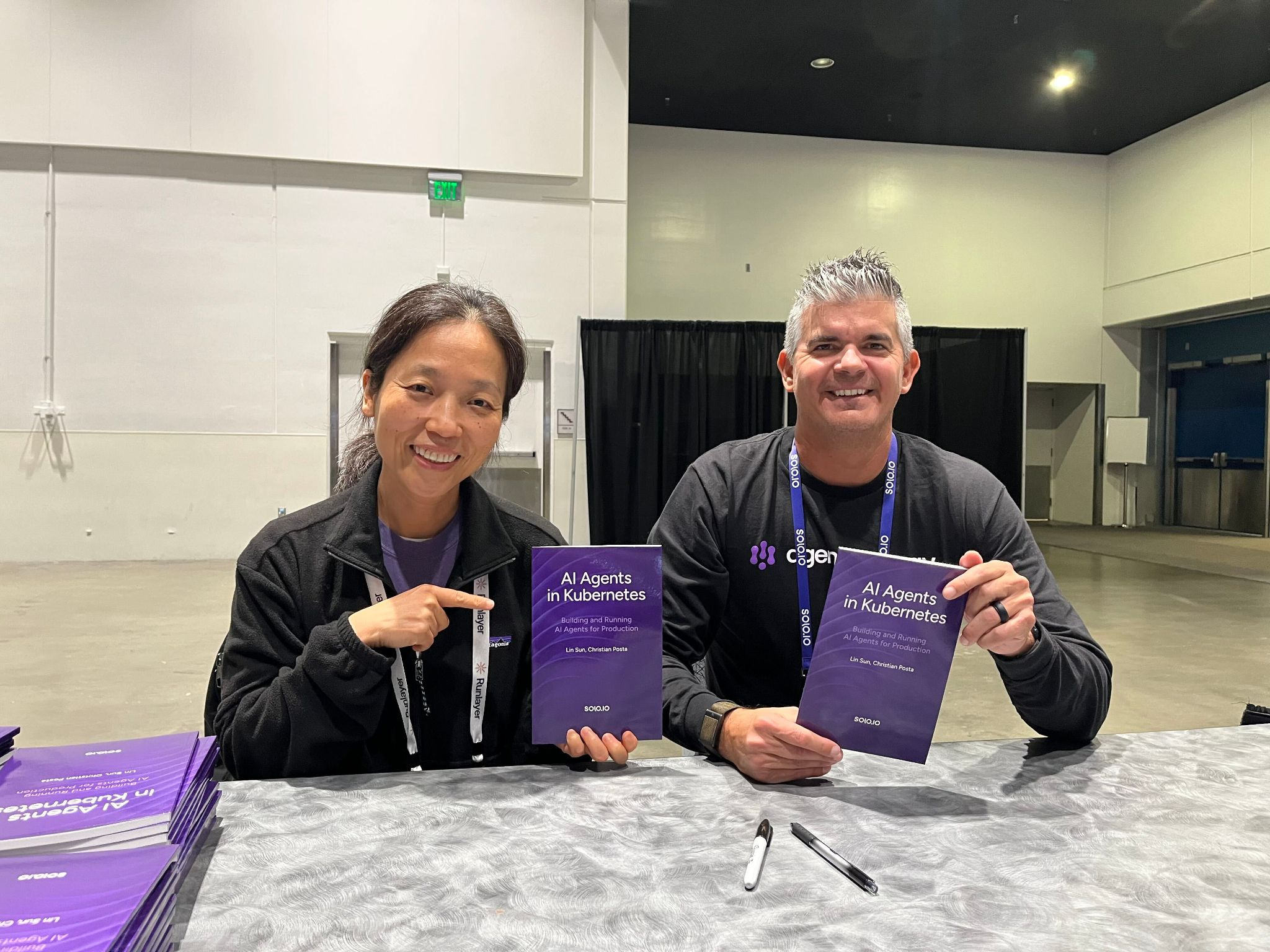
Lin Sun and Christian Posta hosted a signing of their book, AI Agents in Kubernetes, at the AAIF Hub. And judging by the huge line of people waiting to meet them and get their books signed, there's clearly no shortage of interest in learning how to build and operate AI agents on Kubernetes! It's always fun to see the enthusiasm for technical books at these events, especially when the authors are right there to answer questions and talk through ideas with readers.
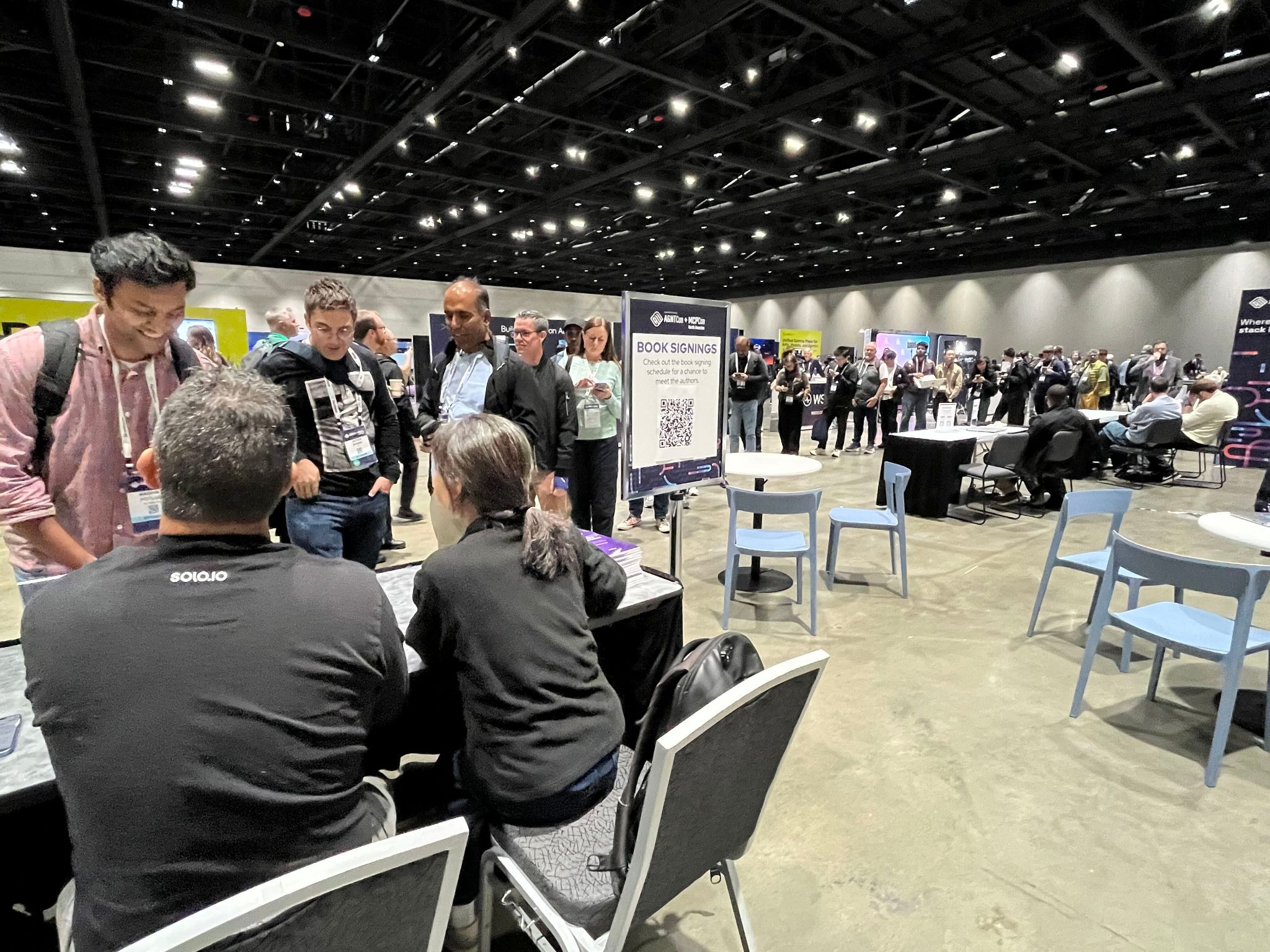
And speaking of Lin, we also have some wonderful news to celebrate.
Lin received the AAIF Technical Excellence Award!
The award, presented by the Agentic AI Foundation (AAIF), recognizes technical excellence and contributions to the agentic AI ecosystem.
Lin has been an incredible contributor to the cloud native and open source communities for years, sharing her knowledge, helping others learn, and pushing the technology forward. From her work on Istio and service mesh to her contributions to agentic AI infrastructure, she's helped make complex technologies more accessible to developers around the world.
Until Next Time!
If there's one thing we're taking away from AGNTCon + MCPCon this year, it's that the conversation around agentic AI is evolving quickly. We're moving beyond simply asking what AI agents can do, and starting to tackle the harder questions about how to run them reliably, securely, and efficiently in production. That's going to take a lot of collaboration across projects, vendors, and communities. And events like AGNTCon + MCPCon are a great reminder of just how much innovation is happening in open source.
A big thank you to everyone who stopped by to chat, joined a session, tried a lab, picked up a book, or shared feedback with our team. These conversations are one of the best parts of coming to events like this. We can't wait to see what everyone builds next!
Want to explore some of the projects we shared at AGNTCon + MCPCon? Check out our event announcements and resources, and get involved with the open source communities behind them.